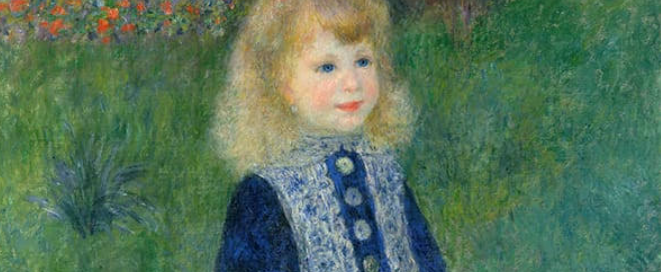
Auguste Renoir, born in 1841, helped launch impressionism—a movement led by young painters eager to break away from stiff traditions and experiment with more relaxed, lively art. Renoir’s work kept changing, even after he left impressionism behind. The Italian Renaissance masters left a big mark on him, pushing his style in new directions. The guy became famous for painting the people of Paris, using bold colors to capture the city’s energy and excitement as the century turned.
Auguste Renoir Biography
Renoir’s early days were humble. He entered the world in Limoges, France, but moved to Paris when he was just three. His dad worked as a tailor, while Renoir started out as an apprentice porcelain painter, which wasn’t exactly thrilling for someone itching for creativity. So whenever he could, he’d sneak off to the Louvre and study masterpieces. Renoir chased side gigs, painting for local customers, and his talent didn’t go unnoticed. Eventually, he landed a spot at the Ecole des Beaux-Arts, where he rubbed elbows with Charles Gleyre and fellow future impressionists like Claude Monet and Alfred Sisley.
The 1860s were rough. Renoir barely scraped by, and the Franco-Prussian War didn’t help—he even fought in it. To pay rent, he drew conventional portraits, though his passion never waned; he loved painting busy Paris scenes, the lively banks of the Seine, and the leafy forests around Fontainebleau. In 1871, during the Paris Commune uprising, he nearly got into serious trouble—a group of Communards caught him painting and thought he was a spy. Raoul Rigault, a leader, happened to spot Renoir and vouched for him, saving Renoir from disaster.
Impressionist period
By the 1870s, Renoir worked alongside Monet, Pissarro, and Manet, drawing inspiration from their creative freedom. The art world mostly shrugged off their new style, so the impressionists organized their own show in 1874 after the Paris Salon rejected them. Renoir mainly showed portraits and, despite critics, earned respect as an original artist. He joined the first three impressionist exhibitions, and his reputation grew. By decade’s end, Renoir exhibited at the Salon and became one of Paris’s most celebrated painters. At heart, Renoir wanted his paintings to bring joy, saying, “To my mind, a picture should be something pleasant, cheerful, and pretty, yes pretty! There are too many unpleasant things in life as it is without creating still more of them.”
Post-impressionist period
In 1881, Renoir traveled through Algeria and then Italy. Meeting the works of artists like Titian and Raphael blew him away. He even painted Richard Wagner’s portrait while in Italy. Around Marseille, Renoir met Cezanne and started shifting his style—combining the structure of classic painting with the color and freedom of impressionism, forging something new. He never gave up the vibrant colors he learned as an impressionist, but his brushwork became more classical.
Personal life
Renoir waited until age 49 to marry Aline Victorine Charigot, one of his former models. She was twenty years younger and featured in many of his family-themed works. They had three children; Jean Renoir, born in 1894, became a notable filmmaker.
By the late nineteenth century, Renoir’s reputation soared. The French state bought “At the Piano” in 1892, and Renoir got to see his own art hanging in the Louvre—a full-circle moment after years spent studying the masters there as a kid.
Later years
For all his growing fame, Renoir struggled physically. His arthritis got worse after a bike accident injured his arm. He spent his final years mostly in a wheelchair, relying on an assistant to put a brush in his hand, but he kept painting. The pace slowed, but the masterpieces kept coming. In 1907, he moved to Cagnes-sur-Mer, chasing warmer weather to ease the pain. He died in December 1919 at age 78.
Art of Renoir
Renoir’s bold use of color stands out. He preferred soft edges and blended objects, giving his paintings a dreamy feel characteristic of impressionism. He painted lots of women, often nude, focusing on everyday moments instead of sexuality. His saturated colors draw viewers in, making the scenes feel intimate and alive. Renoir didn’t sit still—his willingness to explore new ideas influenced future giants like Picasso and Matisse.
About the Author