Claude Monet (1840-1926) didn’t just influence impressionism—he was its heartbeat. Along with a handful of other artists, Monet caught natural light on canvas with a style that was raw, loose, and full of life. He painted everything from bustling city streets to his own garden, always aiming to capture what nature really felt like, not just what tradition thought it should be.
Claude Monet Biography
As Monet put it, “Everyone discusses my art and pretends to understand, as if it were necessary to understand, when it is simply necessary to love.”
Claude Monet was born in Paris on November 14, 1840, but his family moved to Le Havre when he was still a child. Nature grabbed his attention early—he loved watching the sun light up fields of wheat. School bored him stiff, so he spent his time outdoors or sketching cheeky caricatures of teachers. Monet’s dad hoped he’d run the family grocery business, but Monet had other ideas. In Le Havre, he started making a name for himself with charcoal caricatures, which not only brought in a little money but convinced him art was his path. After his father cut off his financial support (not too thrilled about his career choice), Monet survived on those early earnings, which kept him afloat when money was tight.
In 1857, Monet made his way to Paris, where he camped out in the Louvre. But instead of copying the masters, Monet preferred to look out the window or wander outside to paint what he actually saw.
By 1861, Monet had signed up for the army and found himself in Algeria, but after two years, illness gave him a ticket home. He later said his time in Africa shaped his approach to capturing light and color.
Marriage
In 1870, Monet married. When the Franco-Prussian War broke out, he escaped to London, then spent time in Holland before making his way back to Paris. He eventually settled by the Seine, surrounded by like-minded artists—Renoir, Sisley, Gustave, and Manet among them. Monet built a floating studio so he could drift on the river and paint the changing banks.
Everyone was used to artists working indoors, but Monet shook things up by painting outside—plein air, as it’s called. The establishment snubbed this new approach, but that didn’t stop Monet. Sure, he didn’t always finish everything outside; sometimes he took the canvases back home to add the last touches.
Monet and fellow painters started breaking the rules—not just putting down what they saw, but trying to catch the scene’s mood and energy. Monet squeezed paint straight from the tube and stuck blobs of color side by side. Critics called the work unfinished or even amateurish, but for some, it was an exciting new way to see the world. Monet liked to blur outlines with dots or short, thick strokes, building up images with unusual warmth. Instead of browns and blacks, he leaned on colors like flake white, cadmium yellow, vermilion, deep madder, cobalt blue, and emerald green—just as he said in 1905, insisting that technique meant more than which colors he used.
The Impressionist
Then in April 1874, the first Impressionist exhibition opened. A critic actually meant “impressionist” as an insult, poking fun at their lack of careful detail. But Monet and his friends embraced the term—owning the label. It was a turning point. Finally, bold artists like Renoir, Degas, Pissarro, Cézanne, and Guillaumin got to present their art outside the stuffy, traditional Salon de Paris. People came to see the show, but it still took years for the wider world to really catch on.
Monet and the others struggled at first. But slowly, more and more people started to see the appeal. Monet painted obsessively, often tackling a series, fascinated by how the same subject transformed as the light changed. Sometimes he’d have several canvases on the go and switch between them as the sun shifted.
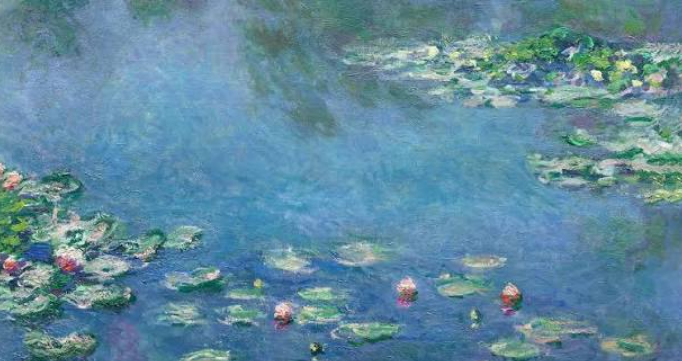
In 1883, when his career finally brought in steady money, Monet rented a house in Giverny, just outside Paris. There, he created a garden—the kind of place artists dream about. He added a lily pond, weeping willows, a Japanese bridge—the whole scene. The garden became the backdrop for some of his most famous works, especially his water lilies. For Monet, nature was everything; he spent hours lost in his garden, calling nature the source of his inspiration. He even joked that maybe he only became a painter because he loved flowers, once saying, “I must have flowers, always, and always.”
Monet and his impressionist friends were obsessed by light and the way colors shifted in a flicker. He once wrote, “Color is my daylong obsession, joy, and torment.”
World War I
During World War I, Monet grew close to French Prime Minister Georges Clemenceau. As the war ended, Monet painted a series of weeping willows as a tribute to the lives lost.
Age caught up with him eventually. Eye problems from cataracts made painting tough, but even after surgery, he kept working, always searching for new ways to see and paint.
By the end of his life, Monet had created a legacy—he never stopped experimenting, and his paintings still feel fresh, alive, and deeply connected to nature. From Monet and the impressionists, a new energy flowed into art, opening doors for the generations that followed.
He died of lung cancer in December 1926, at 86, leaving behind a body of work that changed art forever.
About the Author