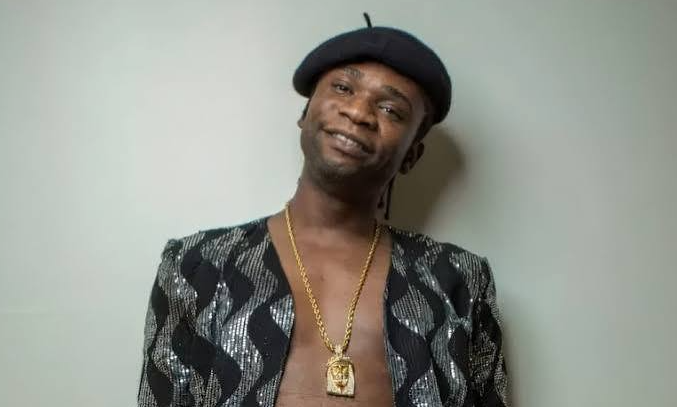
Speed Darlington Biography | Akpi | Darlington Okoye
Akpi | Darlington Okoye | Born March 13, 1989 | Arondizuogu, Imo State, Nigeria
Real Name: Darlington Achakpo Okoye
Stage Names: Speed Darlington, Akpi, Scorpion King, Irregular Speedometer
Born: March 13, 1989 — Arondizuogu, Ideato North, Imo State, Nigeria
Age (2026): 37
Nationality: Nigerian
Ethnicity: Igbo
Father: Chief Pericoma Okoye (legendary Nigerian traditional musician; died February 16, 2017)
Mother: Queen Theresa Onuorah (renowned Igbo highlife musician)
Genres: Afrobeats, Hip-Hop, Afro-Rap, Egedege
Years Active: 2017 – present
Based: Nigeria (formerly New York City, USA)
Net Worth (est.): $500,000 USD
What Does “Akpi” Mean?
Before you really get what Speed Darlington is about, you need to understand that nickname. “Akpi” is Igbo for “scorpion,” and it carries all those sharp edges—you don’t just pick up a scorpion. It stings, it survives, it makes you think twice before you mess with it. Speed Darlington isn’t a guy who just slapped that title on himself. He earned it by being exactly what the internet can’t decide about—a comedian, a provocateur, an artist, a troll, sometimes all those roles mashed together. That confusion, that refusal to be one thing, is right at the heart of who he is.
Family — Musical Royalty from Arondizuogu
Speed Darlington didn’t just stumble into music; he was born surrounded by it. His family is pretty much Nigerian musical nobility, and he’s, oddly, the least famous one in it.
His father? Chief Pericoma Okoye (full name: Pericomo Damian Azubike Nwankwo Okoye). Pericoma was a powerhouse in traditional Igbo music, known especially for Egedege—the wild, percussive dance music of southeast Nigeria. His voice and stage presence made him a legend, and in many ways, he defined traditional music for that region. He passed away in 2017, not long after his son dropped the song that would make “Speed Darlington” a household name.
His mother, Queen Theresa Onuorah, cut her own path. She’s one of the most respected Igbo highlife singers and dancers out there. When she got featured on Larry Gaaga’s “Egedege” alongside Phyno, Flavour, and Pete Edochie, it was just a reminder that she hasn’t faded away—she’s stayed active and respected.
Darlington grew up soaking in all this—he learned the Egedege dance as a little kid because that’s just what happened in his house. If you want to understand how he blends the street vibes of the Bronx with the deep cultural roots of the Igbo, you can start here. This is a guy truly shaped by both worlds.
Early Life — Arondizuogu, the Bronx, and Back
Darlington Okoye was born March 13, 1989, in Arondizuogu—a corner of southeastern Nigeria that somehow keeps producing doctors, professors, and artists at a remarkable rate.
He spent years in the Bronx, New York. That’s hip-hop’s birthplace and, really, one of the world’s densest melting pots. The Bronx gave him things Arondizuogu couldn’t: raw, competitive energy, the grit of American street culture, and the kind of confidence you only get from living with your back to the wall. He started as a professional dancer in New York in the ’90s—his first creative lane, before music really became his thing.
But America wasn’t everything. In a no-filter Instagram video, Speed Darlington said straight up: “America didn’t favour me.” He talked about how moving abroad—the whole “japa” story so many Nigerians dream about—just about broke him. He got arrested multiple times, racked up a criminal record, and struggled to connect because of his accent. America wasn’t home, and it nearly finished him off. He figured out he could only thrive in Nigeria, so he came back.
That return, with all that Bronx swagger and deep Igbo roots, was when Speed Darlington as we know him really started.
Musical Career — The “Bangdadadang” Era and Beyond
Darlington kicked off his music career in 2017 with “Bangdadadang!” It wasn’t clean or polished radio music. It was messy, wild, and full of personality—a bang, not a whimper. Nigerians shared it, argued over it, made fun of it, loved it, and hated it, but everyone knew who made it.
He kept pushing out music, never following the standard Nigerian pop formula:
“Cash & Carry” (2018), “In Love with My Hand” (2019, featuring Zlatan), “Akamu” (2019), “In Eko” (2020), “Ogiriga Owuwa” (2021), “Diaspora Fund$” (2022), “Baby Oil” (2025, after his release from prison).
His collaboration with Zlatan on “In Love with My Hand”—that was a high point, commercially. The title was bold on purpose—no apology, all controversy, which is Speed Darlington’s brand, through and through.
His music is a mashup: Afrobeats vibes, hip-hop flows, plenty of Igbo references, Pidgin English, and, now and then, flashes of Egedege. He’s even dipped into Nollywood. He calls himself “Music Messiah Akpi.” It’s half-joke, half-dead serious. Delivered with enough attitude, it moves from ridiculous to genius.
Social Media Persona — The Architecture of Controversy
If Speed Darlington’s music is the ship, his social media is the engine that keeps it moving. His Instagram is full of hot takes—loud opinions about Nigerian women, shots at celebrities, rants about the music industry. He built a following by being impossible to ignore; no filter, always at the center of some new argument.
His fights with Nigerian celebrities are basically a running show:
— Wizkid: Darlington’s comments about Wizkid turned plenty of fans against him, but he never backed off, aiming straight for the biggest names out there.
— Davido: Same pattern—Darlington goes at Nigeria’s top stars, sometimes for clout, but as he’ll tell you, sometimes just because he means it.
— Falz, Flavour, Tunde Ednut: All targets at one time or another, and the drama with blogger Tunde Ednut turned into a whole saga.
He’s had big blowups over things he said about Nigerian women, especially those from Benin. People called it misogyny, and that criticism has stuck with him.
But Darlington’s not just about courting controversy—he’s also outspoken about politics, corruption, and everyday Nigerian struggles. He posted once about spending ₦1.7 million on just ₦17,150 worth of fuel in Lagos. That complaint went viral—not just for the outrageous price tag, but because he always gripes in real time, letting everyone in.
The Burna Boy Affair — Arrests, Detention, and Kuje Prison
Everything changed in late 2024. This was the stretch that threw Speed Darlington into the wildest legal storm of his career, putting questions of free speech, police power, and celebrity culture under a spotlight.
It started with the Diddy scandal in America—allegations of sex trafficking, racketeering, the whole mess. Darlington posted a video after that, raising questions about Burna Boy’s Grammy win for “Twice As Tall” (an album executive-produced by Diddy). He hinted that maybe Burna Boy’s Grammy wasn’t really on the level. That video made the rounds fast.
First arrest: October 4, 2024. Lagos police picked Speed Darlington up and shuttled him to Abuja, where the Inspector General’s Intelligence Response Team detained him in Guzape. For days, nobody outside the police knew where he was. His mother—Queen Theresa Onuorah—posted a tearful video begging Burna Boy to “release” her son, and it blew up online. Human rights lawyer Deji Adeyanju stepped in, saying the arrest was all because Burna Boy filed a defamation and cyberstalking complaint. Darlington was released on bail, but not before the internet rallied around him.
He went right back online, denied any real beef with Burna Boy, claimed police mistreated him, and said they’d tried to get him to talk about IPOB supporters commenting on his case—a hint that the arrest was also about politics. “I have no beef with Burna Boy,” he said, but things weren’t cooling off.
Instead of fading into the background, he pushed harder, demanding a public apology from Burna Boy’s mother, Bose Ogulu, and ₦12 million in compensation. More rants, more social media drama, with Burna Boy still in his sights.
Second arrest: November 27, 2024. While performing in Owerri, Imo State, he was taken again—this time straight to Abuja and jailed at Kuje Correctional Facility, a high-profile prison known for tough cases and famous detainees. He spent nearly two months there.
He got out January 21, 2025, after making bail from a Federal High Court. He went straight to Instagram, bragging about his “game”: “Five lockups, 19 arrests…when you hear this one, na Kuje.” By his count, that’s 19 arrests and five detentions, both in Nigeria and the US.
He announced plans to sue Burna Boy for ₦300 million for violating his rights, with lawyer David Ihuoma on the case. He even put out “Baby Oil,” a single inspired by his time in prison, spinning his drama into new music right away.
Freedom of Speech and the Broader Debate
This whole saga set off a massive debate in Nigeria. Critics said Burna Boy had crossed the line by using his influence to get the police—specifically a unit meant for serious crimes—to throw a musician in jail just for saying something online. Human rights lawyer Adeyanju accused Burna Boy of abusing his power, reminding everyone it’s weird for an artist who sings about oppression to silence a critic. Civic voices joined in, demanding Darlington’s release.
Supporters of Burna Boy pushed back, arguing that Speed Darlington went beyond criticism, making false and damaging insinuations about someone’s private life, and legal action was fair.
The story turned Darlington, of all people, into a walk-on character in the bigger question: where does Nigeria actually draw the line on freedom of expression?
Legacy and Character
Speed Darlington is tough to pin down. He’s a musician with real roots—he grew up right in the heart of Igbo music culture, learning from his legendary parents, and he brings all of that to a weird, unmistakable style that’s part Nigeria, part Bronx. But he’s also an online agitator, known for saying things most people wouldn’t dare, for better or worse. Some of it’s gotten him in hot water—comments about women, wild accusations, the kind of stuff that lands you in court.
He’s honest about his struggles. America wasn’t kind to him. He came home, started over, and built a career out of pure chaos—the kind Nigerians can’t help but watch. He sums it up simply: “My wealth came from Nigerians, not America.”
As he hits 37, Speed Darlington’s got 19 arrests, an ongoing beef with a Grammy winner, a song inspired by prison, and a lawsuit in motion. He goes by Akpi, Scorpion King, Music Messiah. Maybe that legacy says something profound. Maybe it doesn’t. Honestly, with Speed Darlington, it all depends on who you ask and what day you catch them.
Akpi | Darlington Okoye | Born March 13, 1989 | Arondizuogu, Imo State, Nigeria Real Name: Darlington Achakpo Okoye Stage Names: Speed Darlington, Akpi, Scorpion King, Irregular Speedometer Born: March 13, 1989 — Arondizuogu, Ideato North, Imo State, Nigeria Age (2026): 37 Nationality: Nigerian Ethnicity: Igbo Father: Chief Pericoma Okoye (legendary Nigerian traditional musician; died…