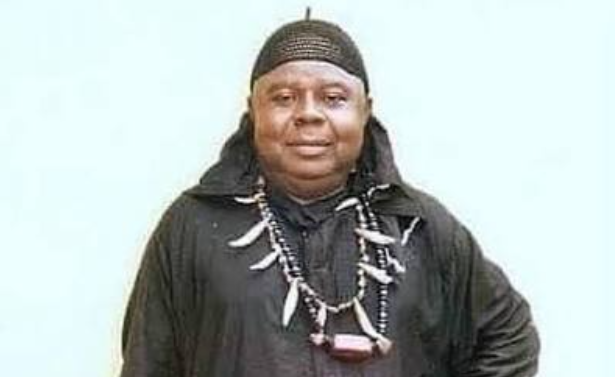
Chief Pericomo Okoye Biography
Full Name: Pericomo Damian Azubike Nwankwo Okoye
Also Known As: Pericoma, Pericomo, Perry-Koma, Perry-Coma, Ichie Mezuo Pericomo Okoye, Arusi Makaja 1 of Igboland
Born: around 1935 in Arondizuogu, Ideato North, Imo State, Nigeria
Died: February 16, 2017, Okigwe, Imo State, Nigeria (about 81 years old)
Nationality: Nigerian
Ethnicity: Igbo
Occupation: Singer, Songwriter, Traditional Musician, Masquerade Artist, Cultural Prime Minister, Traditionalist, Actor
Genres: Traditional Igbo Music, Highlife, Egedege, Ogene, Apala
Traditional Title: Cultural Prime Minister of Arondizuogu, Ichie Mezuo, Arusi Makaja 1 of Igboland
Notable Son: Darlington Okoye (Speed Darlington), Nigerian rapper
Notable Son: Ebube Izuogu, traditional singer
The Man the Ground Knew
Some musicians become famous. Some become beloved. But every so often, you get someone whose story turns into legend—whose impact spills over from music into myth. That’s Pericomo Okoye.
For the people of Arondizuogu and Igbo communities in southeastern Nigeria, especially those who grew up through the ’70s, ’80s, and ’90s, Pericomo was more than a performer. People called him a “living ancestor” and meant every word. He was a moving archive, a keeper of traditions, the community’s cultural prime minister in every sense, and, honestly, the kind of man people swapped stories about—stories that piled on him from every direction, always bigger, always stranger.
He wrote over 200 songs. He served as Arondizuogu’s Cultural Prime Minister until he died. He was at the center of their masquerade cult—one of the most important institutions for the Igbo. Scholars wrote about him. The Mbari Literary Society gave him a Distinguished Achievement Award. He popped up in Nollywood movies. And, five months after he died, his son Darlington Okoye (Speed Darlington) stood up and said, “I hated him.” That’s a kind of legacy, too.
He was all these things at once. How many people can say the same?
Arondizuogu — The Town That Made Him
To understand Pericomo, you have to know Arondizuogu—a town in Imo State that straddles Ideato North, Okigwe, and Onuimo local government areas. It’s not a big place, but its cultural energy is something else. Outsiders are always surprised by how many scholars, professionals, musicians, and community leaders come from there. Each year, the Ikeji Festival—Arondizuogu’s famed Igbo celebration—brings people from all over. Folks close to Pericomo say his music is a big reason the festival became as famous as it did. Emmanuel Onwubiko, a local and leader of HURIWA, said Pericomo “epitomised the best of the culture and tradition of Arondizuogu and indeed the Igbo nation.”
He grew up in that world, in the heart of music, religion, masquerade, and storytelling traditions. He didn’t just watch them; he dove straight in and became a master. After a while, you couldn’t pull the man apart from the community that made him, or from the town’s reputation he helped build.
Music — Sound, Philosophy, and the Shape of a Catalogue
His style still stands out in Nigeria’s traditional music scene—something nobody has quite copied. Scholars call it a blend of flutes, drums, ogene (the classic Igbo iron bell), and apala rhythms—together making a sound that just hits you, yet always seems to have another layer for those who know what to listen for.
People sometimes compare him to Mike Ejeagha, who’s legendary for narrative, almost poetic music. But Pericomo’s territory was different—more spiritual, more philosophical. His songs are loaded with proverbs and wisdom, weaving together the Igbo oral tradition—parallel lines, hints instead of direct hits, praise, warning, you name it—all to hand down values and history.
Some of his best-known tracks: “Ogu Na Mgba Medley,” “Ebube Agu Medley,” “Omenana na-ese okwu” (tradition settles disputes), “Izu ka mma na nne ji” (cooperation is better than the mother of yam), “I ga-atakwute ya aja” (you will make atonement to the earth), and “E ji m ogu na ofo” (I fight with righteousness). The message is clear—he wasn’t making songs just for dancing. He meant them to last, and they have.
Scholars noticed, too. A 2016 journal article compared him to Chief Oliver de Coque. Both pillars of Igbo music, but de Coque’s music reaches for a broader humanism, while Pericomo’s digs deeper into the strictly traditional—honoring herbalists, invoking the ancestors, celebrating those seen as close to the spirit world. And that wasn’t a constraint; it was a choice—a declaration of where he stood.
His catalogue, over 200 songs strong, turned him into a walking soundtrack of Igbo history. Listening to Pericomo means getting an education—not just music, but who the Igbo people were, and still are.
Traditional Religion — Odinala, Obeah, and a Life of Practice
You can’t talk about Pericomo without his religion. He didn’t just pay lip service to Odinala (sometimes called Obeah)—the indigenous Igbo spiritual system. Odinala is all about the earth deity Ani, ancestors, and a world thick with spirits and rituals long before Christianity or Islam touched southeastern Nigeria.
Pericomo practiced it openly. He didn’t care that, by his time, most people had left the old ways behind, pressured by Christianity. His music kept calling on the spiritual world—praising real mystics, insisting the ancestors’ ways were still legitimate.
But he was more than just a follower. In Arondizuogu, people called him a powerful medicine man, a guy with real supernatural abilities—so much so that a lot of locals simply said, “he’s a little god.”
Yet, the people who knew him say he hated evil. He never used his supposed powers for harm. He preached and genuinely lived by purity, peace, and love. Even as a traditionalist, he didn’t shy away from God—in one song, he sings to the Supreme Being: “Chineke nke usuu ndi agha, Alpha na Omega…” (God of hosts, Alpha and Omega in whom I boast, the three-in-one blessed God). He didn’t see any contradiction there. For him, the ancient and the divine coexisted.
Legends — Upper Iweka and the Weight of Awe
The stories about Pericomo are part of who he was. In Igbo tradition, somebody like him picks up legends like souvenirs—they’re testament, not tall tales.
The most famous story goes like this: Pericomo runs into illegal tax collectors at Upper Iweka, Onitsha—a tough spot, run by tough characters who shake down travelers. Pericomo brushes them off. A tout picks him up to haul him to their “office”—but suddenly, Pericomo’s weight turns superhuman. The tout can’t set him down. Neither can any of his friends. They beg, and only after they make the right ritual gestures does Pericomo finally come down. People say the extortion racket didn’t last much longer.
Another legendary tale is rooted in the Ikeji Festival—Pericomo reportedly planted a banana sucker, watched it grow, fruit, ripen, and then dared anyone to eat it. Did it really happen? Who knows. But the message sticks—he operated where the regular world and the spirit world blur.
Cultural Authority — Prime Minister, Masquerade, and the Ikeji Festival
He wasn’t just a musician or a mystic. Pericomo held the formal title of Cultural Prime Minister in Arondizuogu, with real say over the town’s cultural traditions. He played a key role in the community’s masquerade cult—a ritual society where masked performers embody ancestral spirits and keep the social order.
His music gave the Ikeji Festival a wider audience. The festival, a big deal in southeastern Nigeria, involves masquerades, music, community gatherings, and rituals to honor the earth. People far beyond Imo State started showing up, and a huge part of why is the music Pericomo put out there.
Nollywood, Academia, and the Mbari Award
Late in his life, Pericomo stepped into Nollywood. He acted in “Lion of Africa” with Pete Edochie, a pillar of Nigerian cinema, himself linked with Igbo culture. This just underlined Pericomo’s evolving reach—he wasn’t stuck in his lane; he showed up wherever Igbo culture needed a voice.
He attracted a lot of academic attention, too. That same Ministerium article sets him and Oliver de Coque side by side as two ends of a spectrum—each equally vital, equally worthy of study.
In 2010, the Mbari Literary Society of Owerri honored him with a Distinguished Achievement Award for keeping Igbo culture alive. He couldn’t attend the ceremony—the honor came to him, delivered at his home. That pretty much says it all: if you wanted to honor Pericomo, you came to his world.
Family — Many Wives, Many Children, One Complicated Inheritance
Pericomo had several wives, many children. His eldest is Omor Perry. Ebube Izuogu, another son, sings traditional music too—following in his father’s footsteps right down the center of the old road.
Then there’s Darlington Achakpo Okoye, aka Speed Darlington, the rapper and online personality. Their relationship was, to put it mildly, rocky. After Pericomo passed, Speed Darlington said, “I hated him.” No real details, just that. Even in a family so steeped in culture and legacy, sometimes the public legend and the private father are two different people.
Still, look at Speed Darlington’s music—Egedege rhythms, raw self-expression, hints of the mystical, refusing to apologize to anybody. Whether he admits it or not, he’s carrying his father’s legacy in his own way.
Death and the Weight of Departure
Pericomo died on February 16, 2017, in Okigwe, after a short illness, around age 81. When the news broke, it came with the word “allegedly”—as if people weren’t ready to believe he could actually die. It just didn’t seem possible.
BusinessDay’s tribute summed it up: “Pericomo Okoye: When a Big Masquerade Exits the Stage.” The point was clear—something bigger than just a man had left. But, as the last line of that tribute put it: legends never truly die. So Pericomo lives.
Legacy — A Living Ancestor Who Remains
You don’t see many musicians like Pericomo Okoye. He wasn’t flashy. He didn’t chase international stardom. He lived, worked, and died where he began—in southeastern Nigeria, serving his community. His 200+ songs form one of the richest collections in Igbo traditional music. He acted, performed rituals, sustained the old religion, appeared in films, drew scholars’ interest, and fathered both music-makers and rebels.
In the words of Emmanuel Onwubiko, he was a “living ancestor”—a man so steeped in and expressive of his culture’s oldest knowledge, the line between man and tradition kind of disappears.
And that’s just it. Pericomo lives.
Full Name: Pericomo Damian Azubike Nwankwo Okoye Also Known As: Pericoma, Pericomo, Perry-Koma, Perry-Coma, Ichie Mezuo Pericomo Okoye, Arusi Makaja 1 of Igboland Born: around 1935 in Arondizuogu, Ideato North, Imo State, Nigeria Died: February 16, 2017, Okigwe, Imo State, Nigeria (about 81 years old) Nationality: Nigerian Ethnicity: Igbo Occupation: Singer, Songwriter, Traditional Musician, Masquerade…