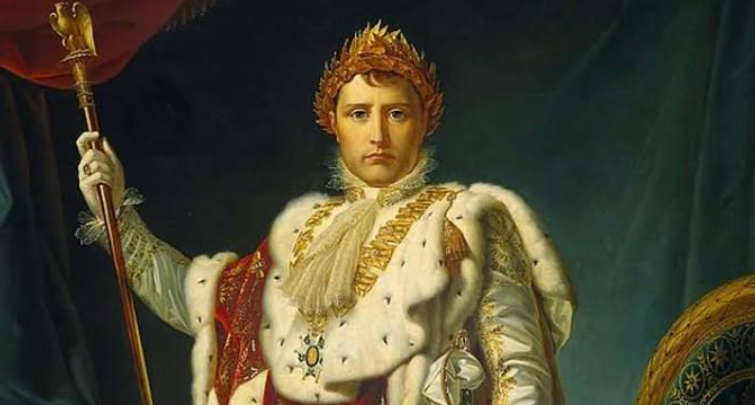
Napoleon I, known to most as simply Napoleon, changed the course of European history. He wasn’t just another general—he redefined what it meant to lead.
“France has more need of me than I have need of France.”
– Napoleon
Napoleon Bonaparte Biography
His story starts in Corsica. He trained as an artillery officer in France, and pretty quickly, he set himself apart on the battlefield in Italy. After that, things moved fast. In 1799, he pulled off a coup and took control, naming himself First Consul. Five years later? He crowned himself Emperor. Not exactly shy. In the early 1800s, he marched the French armies across Europe, beating just about every major power on the continent. Victories like Austerlitz turned him into a legend. He built a web of alliances, put family and friends on European thrones, and at one point, it looked like France was unstoppable—largely because of Napoleon’s sheer tactical brilliance.
“Circumstances–what are circumstances? I make circumstances.”
– Napoleon
Invading Russia
But nothing lasts. In 1812, he invaded Russia. His army made it all the way to Moscow, but the city was deserted. The Russians had burned it to the ground and vanished. Winter hit, his men froze and starved, and the retreat wrecked his army.
A year later, in 1813, his enemies—united in the Sixth Coalition—defeated him at Leipzig. By 1814, they invaded France itself, forced Napoleon to abdicate, and shipped him off to Elba. He didn’t stay there for long. Less than a year later, he escaped and marched back to Paris. The king sent an army to arrest him, but in a wild twist, his old soldiers rallied to his side instead. The king bolted. Napoleon was back—just like that.
But Europe united against him again, led by the Duke of Wellington. At Waterloo, June 1815, Napoleon faced his toughest battle. For a while, it looked like he might pull it off, but then the Prussians arrived. The French lines broke. Napoleon lost everything. This time, he was exiled much farther away—to Saint Helena, under the watchful eye of the British. He died there six years later. The doctors said it was stomach cancer, although some claim he was poisoned.
Still, he wasn’t just about war and conquest. Napoleon actually spent a lot of time thinking about power, faith, and legacy.
“Alexander, Caesar, Charlemagne, and I have founded empires. But on what did we rest the creations of our genius? Upon force. Jesus Christ founded his empire upon love; and at this hour millions of men would die for him.”
– Napoleon
Napoleon changed how armies fought. His modernized tactics are still studied in military academies everywhere. Sure, his enemies labeled him a tyrant, but he also built things that lasted—above all, the Napoleonic Code, which shaped the laws and administration of much of Europe.
Life and Legacy
When you look at his life, it’s hard not to be amazed by the sheer scale of what he accomplished—and the contradictions he embodied. He believed fiercely in his own destiny and that of France. He smashed old systems and dragged Europe into the modern age, bringing ideals like religious tolerance and rational laws—but he did it through war, conquest, and sometimes, brutal efficiency. Millions died, and even his “liberalism” came at the point of a sword. Sri Aurobindo once called him “the despotic defender of democracy,” and that nails the paradox.
In the end, his ambition finally outran his luck. Defeat in Russia, then disaster at Waterloo, brought him down for good.
But there’s no denying his legacy. Even Wellington, the man who beat him at Waterloo, gave him the highest praise:
“In this age, in past ages, in any age, Napoleon!”
About the Author