Pope Urban II led the Roman Catholic Church from 1088 to 1099. In 1096, he made a fiery speech urging Christians to launch a “Holy Crusade” to reclaim the Holy Lands from Muslim rule. He promised full pardon of sins, a righteous cause, and even spoke of the wealth waiting in the East. Knights from all over Europe listened, and what followed was two centuries of bloody conflict in the Holy Land—something that forever changed both European and Middle Eastern history.
Pope Urban II Biography
Born in Lagery, France, Urban was originally named Eudes (or Odo) Châtillon-sur-Marne. From a young age, he set his sights on a career in the Church. He served as prior of the influential Cluny Abbey and then became cardinal-bishop of Ostia. He got close to Pope Gregory VII, the man pushing for reforms—cracking down on church corruption and centralizing power in Rome. Gregory’s backing proved crucial, helping Odo become Pope Urban II in 1088.
Urban II didn’t have an easy run. He had to outmaneuver the German Emperor Henry IV, who supported a rival pope named Clement III. Still, Urban showed real leadership. He kept pushing the reforms that Gregory started, but he also understood politics and knew when to bend. By building alliances with important European leaders, he built up his position and fended off rivals, all while cracking down on corruption.
“The church shall be catholic, chaste and free: catholic in faith and the communion of saints, chaste from all contagion of evil, and free from all secular power.” Those were his words at the Council of Clermont in 1095.
The Crusades
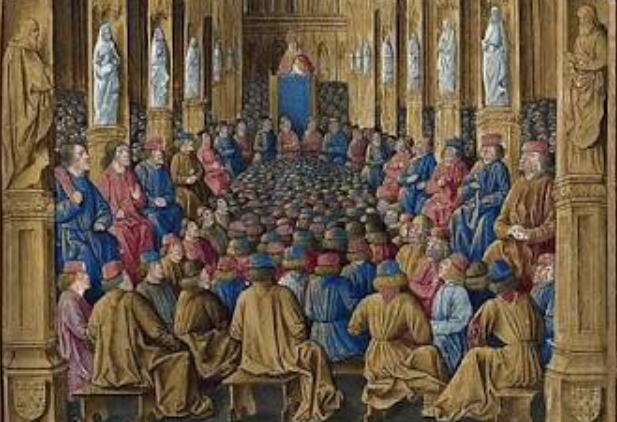
But Urban’s real claim to fame is the speech he gave on November 27, 1095 at Clermont. He urged Christians to unite and retake Jerusalem from Muslim rulers, saying this was their moral duty. Byzantine Emperor Alexios I Komnenos had reached out for help against the Seljuk Turks, and Urban saw a chance to rally the West. He said that anyone who fought would have their sins forgiven and go straight to heaven. He argued the Holy Lands were filled with riches, while Western Europe was overcrowded. In short, Urban gave people spiritual, economic, and social reasons to join the cause.
“I, or rather the Lord, beseech you as Christ’s heralds to publish this everywhere,” he said, calling out to “foot-soldiers and knights, poor and rich.” He promised, “All who die by the way… shall have immediate remission of sins.”
The speech electrified his audience. People reportedly broke into shouts of “God Wills It!”—the battle cry of the Crusaders. Steven Runciman writes that as soon as Urban finished speaking, Bishop of Le Puy jumped up and asked to join the expedition. Hundreds rushed forward to do the same.
What started as a call to arms brought Western Europe together with a common purpose. The pope’s authority grew, and the rival pope, Clement III, was quickly thrown out of Rome by French soldiers who answered Urban’s call. But the Crusades sparked massive violence in the Holy Land for two centuries, and ironically, they also led to an influx of Eastern culture and knowledge into Europe.
It’s worth noting—no one wrote down Urban’s speech exactly as he gave it. We have five versions, written later, and they don’t all match up. Most scholars think the writers tweaked the story, putting words in the pope’s mouth that fit their agendas. But Urban’s letters to European kings make it clear what he wanted: a crusade to retake Jerusalem, and that those who went out of real devotion—not just for riches or fame—would find their penance.
Urban didn’t just focus on the Holy Land. He encouraged Christians to keep fighting the Moors in Spain. He might have even hoped this crusade would heal the split between the Eastern and Western Churches.
The First Crusade succeeded in capturing Jerusalem. Urban II died just two weeks after the city’s fall in 1099, before the news reached him.
Nearly 800 years later, in 1881, Pope Leo XIII beatified Urban II—a controversial decision, since his call for crusade set off centuries of brutal conflict between Christians and Muslims. The wars Urban started often warped the ideals of Christian virtue, replacing them with anger and hatred. Even now, the echo of that clash between Christianity and Islam still lingers in the world.
About the Author