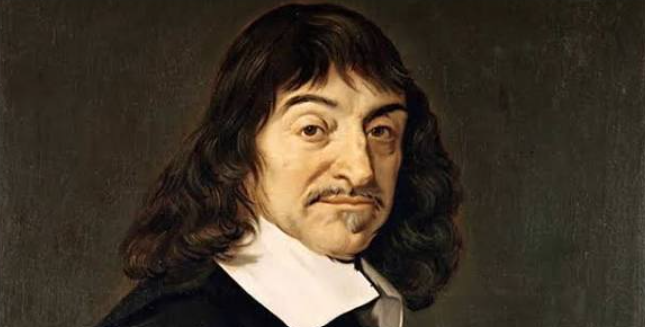
Rene Descartes was a French philosopher and mathematician—and people often call him the founder of modern philosophy. He stood out because he challenged the old medieval ideas, the ones built on Aristotelian philosophy, and insisted that truth should come from human reason, not just tradition. This push for clear thinking and logic ended up shaping the Enlightenment and the whole direction of modern thought. Even his work in mathematics left a mark, paving the way for people like Isaac Newton.
Early Life
Descartes was born on March 31, 1596, in La Haye en Touraine, France. His family was Catholic, though they lived in a part of France where most people were Protestant Huguenots. Descartes lost his mother while he was still a baby, so his grandmother and great uncle raised him.
He went to a Jesuit college at La Flèche, where he got a solid, modern education—he studied math, physics, and the latest science, including Galileo’s ideas. Later, he earned a law degree at the University of Poitiers, mostly because his father wanted him to. But honestly, the legal world didn’t excite him, so he traveled around, chasing new experiences. In 1618, he joined the Dutch States Army in Breda and focused on military engineering, which meant more math.
Visions of a New Philosophy
In November 1619, in Neuburg an der Donau, Descartes said he had a series of powerful visions while shut in his room. He felt that a divine spirit had shown him the possibility of a new philosophy—one that combined math and philosophical thinking.
Descartes always wanted to think for himself—he didn’t like just accepting what he read. After this vision, he became even more committed to following his own ideas, which would come to define both his philosophy and his math.
After leaving the army in 1620, Descartes traveled around Europe, then returned to France, ready to write. His first major work, “Rules for the Direction of the Mind” (written in 1628), laid out his approach: rely on reason, use your mental abilities, and methodically seek out truth. One of his rules said, “Don’t just ask what others think or what you guess, but look for what you can clearly and certainly see for yourself.”
Settling in the Netherlands, Descartes finally found a stable place to live and did most of his writing there. He kept studying math and even enrolled at Leiden University to study mathematics and astronomy.
Discourse on the Method
In 1637, Descartes published some of his most famous work, including “Discourse on the Method.” In it, he laid out his idea that you should never accept anything as true until you’ve examined it carefully for yourself.
He stayed a committed Catholic all his life, but his ideas still stirred controversy. After the Church condemned Galileo in 1633, the University of Utrecht also denounced Descartes’s philosophy. A few years after his death, the Pope put Descartes’s work on the Index of Prohibited Books.
Ironically, Descartes always claimed that his meditations were supposed to defend Catholic faith—just by using reason instead of blind faith. But, by encouraging people to start with doubt, he shifted authority away from the Church and toward human logic. That change was a huge part of the Enlightenment and really chipped away at church power.
Because he was so willing to question everything, even God’s existence, a lot of people wondered if Descartes actually believed—or if he was really a Deist just pretending to be Catholic for safety’s sake. According to his biographer, Gaukroger, Descartes stayed loyal to Catholicism, but he also couldn’t let go of the drive to question and reason out the truth.
Moral Philosophy
Descartes wrote widely on philosophy and related topics. In 1649, he published “Passions of the Soul,” a book sparked by his letters with Princess Elisabeth of Bohemia about morality and psychology. The work caught the attention of Queen Christina of Sweden, who invited him to her court.
So, in 1650, Descartes reluctantly traveled to Sweden, where he taught philosophy lessons to the Queen in the early mornings. Things didn’t exactly click between them—and to make matters worse, the chilly castle air gave him pneumonia. He died soon after, on February 11, 1650.
Personal Life
Descartes had a relationship with Helena Jans van der Strom, one of his servants. They had a child together, but sadly, the child died in 1640, which devastated Descartes.
Philosophy
Descartes’s approach to philosophy was bold and distinctly his own. He believed in starting from scratch—with total doubt—and then building up what you could honestly know for certain. That led to his most famous line: “I think, therefore I am.” Even if he doubted everything, he couldn’t doubt the fact that he was doing the doubting. That was proof he existed—as a thinking being. He didn’t trust the senses; he trusted reason and deduction.
From this core idea, Descartes argued that you could even logically prove the existence of a benevolent God, based on the idea of a supremely perfect being.
Dualism
A big element of his thought was dualism—the idea that the mind (or soul) and the body are really two distinct things. He explored how the mind could influence the body, and vice versa.
Moral Philosophy
Descartes went on to develop ideas about how you should live in the world—namely, following the laws and customs around you, avoiding extremes, and focusing on controlling your own mind and desires. He wrote, “Try to conquer yourself rather than fortune, and change your desires rather than the order of the world… except our thoughts, nothing is fully in our power.”
Mathematics and More
Descartes wasn’t just a philosopher; he made major contributions to mathematics by developing analytic geometry—using algebra to study shapes and space. His work influenced Newton and Leibniz, both in calculus and beyond.
He had a polymath’s curiosity, digging into fields like optics, astronomy, even music.
Some of Descartes’s big works include:
– Musicae Compendium (1618)
– Rules for the Direction of the Mind (1626–1628)
– Discourse on the Method (1637)
– Geometry (1637)
– Meditations on First Philosophy (1641)
– Principles of Philosophy (1644)
– Passions of the Soul (1649)
His legacy?
A fresh, questioning approach to truth that still shapes the way people think today.
About the Author