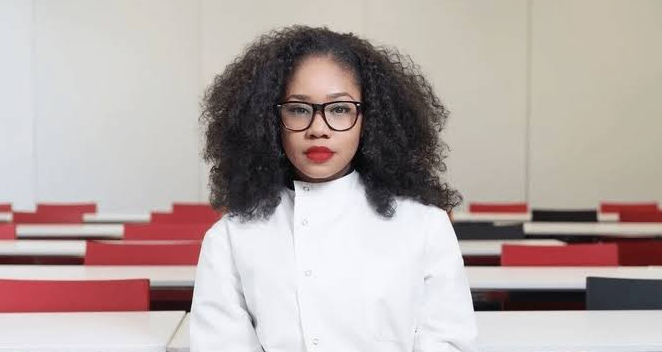
Dr. Ifeyinwa “Ify” Aniebo Rhodes-Vivour — Biography
Ifeyinwa Aniebo Rhodes-Vivour, known as Dr. Ify or just Ify Aniebo, was born in 1983 in Umunze, Anambra State, Nigeria. She holds British-Nigerian citizenship and grew up in a family where public service wasn’t just an ideal—it was life. Her father, Brigadier-General Augustine Aniebo, served as Military Administrator of both Borno and Kogi States, tackling major national challenges in some of Nigeria’s most pivotal regions.
That sense of duty, putting something bigger than yourself at the center of your career, is the through line in everything Ify has done. After growing up in Nigeria, she headed to the UK for university and never lost sight of that family legacy.
She’s married to Chief Gbadebo Rhodes-Vivour, who’s made his mark as an architect, activist, and politician in Lagos. He ran for governor in 2023 on the Labour Party ticket, finishing runner-up, and became the Obalefun of Lagos in 2025. Their partnership is built on a shared belief in using their skills to serve others instead of chasing personal gain—a value rooted in both their family histories.
Education — Building the Foundation Across Continents
When you look at Ify’s education, it’s clear she knew exactly where she wanted to go—and she covered a lot of ground getting there. She started out in Genetics and Microbiology at Queen Mary University of London. That set the base, but she wasn’t done. She earned an MSc in Applied Biomolecular Technology from the University of Nottingham (funny enough, her husband later studied architecture there, though their time didn’t overlap).
She moved on to Oxford for a Master of Research in Public Health, and soon added a Master of Public Health (MPH), also at Oxford. That was her pivot from the molecular nuts and bolts to the bigger health policy picture. She completed her PhD at the London School of Hygiene and Tropical Medicine—her research digging into how African strains of the malaria parasite develop resistance to artemisinin, the best we’ve got in malaria drugs, especially by routes other than the notorious PfK13 mutation. That question isn’t just academic. If resistance spreads from Southeast Asia (where it first showed up) into Africa, decades of hard-won progress on malaria could be wiped out.
Along the way, she picked up scholarships from ExxonMobil and the Wellcome Trust—so she wasn’t just collecting credentials, she was earning the toughest ones global science has to offer.
Research Focus — Malaria, Drug Resistance, and Genomic Surveillance
Dr. Aniebo’s research is all about one urgent question: How can molecular genetics and genomics help Nigeria and the rest of Africa track, predict, and wipe out malaria—and what’ll it take to put African scientists in the driver’s seat?
Malaria still kills hundreds of thousands every year, most of them kids under five in sub-Saharan Africa. Ify’s connection to the fight is personal; as a child in Nigeria, she repeatedly battled malaria herself. She’s talked about that as her spark—she wanted to hit back using science, not just survive. You can feel that motivation in her work—a sense of clarity about who she’s fighting for.
She zeroes in on how Plasmodium falciparum builds resistance to ACTs (artemisinin-based combination therapies), and she’s pushed into genomic surveillance, tracking parasite populations across huge regions and spotting resistance mutations before they explode. She’s led some of Nigeria’s largest-ever malaria sampling studies and helped set up systems that fold real-time genetic data into national health policy making.
Her work got a nod from the MESA Malaria Knowledge Hub in 2024, which highlighted her efforts to strengthen Nigeria’s molecular surveillance system—something that matters way beyond Nigeria since the country shoulders a huge percentage of the world’s malaria cases and deaths. Effective surveillance here is a global win.
She writes for places like Scientific American too, translating technical work in genomics for a broad audience and challenging quick-fix solutions like genetically modified mosquitoes.
Academic Roles
Now, Dr. Aniebo is Associate Professor of Molecular Biology and Genomics at the Institute of Genomics and Global Health (IGH)—formerly ACEGID—at Redeemer’s University, Nigeria. ACEGID/IGH has led the continent in genetic sequencing during emergencies like Ebola and COVID-19, and her appointment was celebrated in-house as “ACEGID’s Intellectual Amazon.”
She’s also a panel member for the Future of Health and Economic Resiliency in Africa (FHERA) at Harvard University—bringing researchers and decision-makers together to imagine where African health could go next.
Previous Experience
Her resume runs the full scale: from hands-on health work to policy advocacy to cutting-edge lab research.
She worked as an HIV Research Associate with the Clinton Health Access Initiative, learning how science, procurement, and politics tangle together when you’re trying to get treatment to people who need it most. As a Takemi Fellow at Harvard, she was part of an elite group of global health thinkers developing new ideas and research directions. And as a Senior Research Scientist at the Health Strategy and Delivery Foundation in Lagos, she focused on bridging the gap so that solid research actually turns into better public health outcomes at the state level.
AfroScientric — Opening Doors for African Women in STEM
A big piece of Ify’s story is the social enterprise she created: AfroScientric. It’s built to give African women a real shot in science, technology, engineering, and math—the kind of help Ify herself had to go without.
She’s been open about how she never had a mentor all the way through school and into her career. She was often the only young African woman in the room—a sign that academic systems have failed a whole generation. She started AfroScientric to flip that script, building a pipeline of talented young African women who don’t have to navigate it alone.
AfroScientric works with global publishers like Springer Nature, running training programs for early-career researchers all across Africa, not just Nigeria.
Published Writing and Policy Advocacy
Dr. Aniebo doesn’t keep her views trapped in the lab. She’s published opinions and commentary in Scientific American, Nature Medicine, and PLOS Global Public Health—often on issues at the interface of science and policy.
She’s urged caution about GMOs and genetically modified mosquitoes, both for scientific and social reasons, echoing advocacy also championed by her husband. In Nature Medicine, she joined other African researchers in calling for global health funders to restructure their investments—less extractive, more collaborative, with African scientists as true leaders.
She’s dug into the history of colonialism and malaria in the governance of global health in PLOS Global Public Health, and she’s made the economic case for backing African research and development in Nature Medicine, arguing this isn’t charity but a smart bet for Africa’s future growth.
Honours and Awards
Her work hasn’t gone unnoticed. She’s won:
– Young Person of the Year (2010), The Future Awards Africa
– Best Use of Science / Scientist of the Year (2010), The Future Awards Africa—scoring both in the same year
– New Voices Fellow, Aspen Institute (2016), a program that puts global health’s rising stars on international stages
– Calestous Juma Fellowship, Bill and Melinda Gates Foundation, honoring African scientists tackling big science and innovation challenges
– ExxonMobil and Wellcome Trust scholarships during her PhD
Public Voice — Scientist as Citizen
What sets Dr. Aniebo apart is her refusal to separate science from the question of who gets to drive it. Who sets the agenda? Who funds the work? Who benefits, and who gets left out? She’s made her case everywhere: in peer-reviewed journals, on big international panels, and in the mainstream press. She built a platform for other African women to make their own mark in STEM. And she does all this while driving forward essential research on diseases like malaria.
She’s a public scientist in the truest sense—focused as much on getting the science to matter in the real world as on the raw research itself. In African global health, her voice is consistent, bold, and purpose-driven—one of the most influential of her generation.
Ifeyinwa Aniebo Rhodes-Vivour, known as Dr. Ify or just Ify Aniebo, was born in 1983 in Umunze, Anambra State, Nigeria. She holds British-Nigerian citizenship and grew up in a family where public service wasn’t just an ideal—it was life. Her father, Brigadier-General Augustine Aniebo, served as Military Administrator of both Borno and Kogi States, tackling…