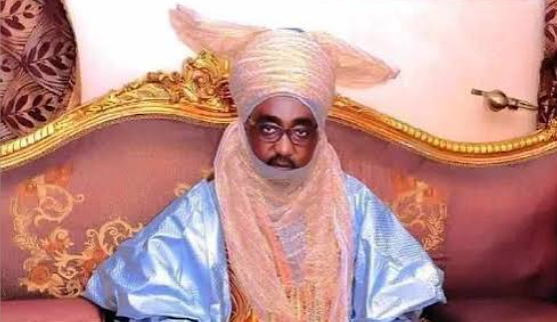
Alhaji Ahmed Nuhu Bamalli Biography — 19th Emir of Zazzau Sarkin Zazzau
Full Name: Alhaji Ahmed Nuhu Bamalli CFR
Title: 19th Fulani Emir of Zazzau (Sarkin Zazzau)
Born: June 8, 1966, Kwarbai, Zaria, Kaduna State, Nigeria
Ruling House: Mallawa Dynasty
Reign: October 7, 2020 – present
Coronation: November 9, 2020
Predecessor: Alhaji Shehu Idris (1975–2020)
Father: Nuhu Bamalli (former Nigerian Minister of Foreign Affairs)
National Honour: Commander of the Order of the Federal Republic (CFR)
The Throne and Its History — Zazzau Emirate
Zaria isn’t just any city in northern Nigeria — it’s one of the oldest, with deep roots that go back over a thousand years. The Kingdom of Zazzau was a powerhouse in the Hausa world, one of the legendary Seven True Hausa States. Wars, conquests, dynasties rising and falling — this city has seen it all. The throne sat solid until the jihad of Usman dan Fodio in 1804 shook things up and ushered in the Fulani era. For the next couple of centuries, Zazzau’s palace stood as a nerve center of tradition and power.
And then came Shehu Idris, who ruled for 45 years, the longest in the emirate’s history. When he died in 2020, the throne didn’t just become vacant; it opened a door no one from the Mallawa Dynasty had walked through in a hundred years.
Early Life & Family Background
Ahmed Nuhu Bamalli was born on June 8, 1966, in Kwarbai, Zaria. The royal blood ran thick in his veins — not just because his father, Nuhu Bamalli, was a key figure on Nigeria’s national stage, but because his family tree stretches deep into the roots of northern Nigeria’s history.
He talked about this in detail with Daily Trust in September 2026. His great-grandfather, Mallam Musa, fought with Usman dan Fodio, helped establish the caliphate, and marched into Zaria with the jihadists in 1808. There’s nothing distant about that heritage — it’s alive in his family stories, in records handed down and shared by respected historians like Professor Murray Last.
His maternal blood connects him to Sultan Muhammad Bello and Sultan Aliyu Babba, so yes, that means Usman dan Fodio sits somewhere among his ancestors, too. Through his mother’s family, he’s linked to the old Barebari Dynasty, and his wife comes from the Katsinawa Dynasty — daughter of the late Emir Shehu Idris, no less. In Bamalli’s words, he’s probably the only Emir in Zazzau’s history with direct ties to three of the four ruling houses. That’s not just pedigree. That’s pretty much the royal trifecta.
Education
Bamalli’s education stands out. He earned his law degree from Ahmadu Bello University in 1989, then circled back for a master’s in international affairs and diplomacy in 2002. Along the way, he picked up a postgraduate diploma in management from Enugu State University of Science and Technology in 1998, attended a fellowship on conflict resolution at the University of York in 2009, completed a diploma in organisational leadership from Oxford in 2015, and wrapped up Harvard Business School’s General Management Program in 2011.
Most traditional rulers don’t have this kind of CV. Bamalli’s academic path cuts through law, management, international diplomacy, and leadership. It shaped his life before the palace and sets the tone even now.
Career Before the Throne
He’s seen the inside of several industries. Bamalli started out with the Metropolitan Management Agency, then became Head of HR at Mtel, Nigeria’s early telecom outfit. Later, he moved into banking, then took executive roles at the Nigerian Security Printing and Minting Company, even serving as acting managing director.
He joined the Kaduna State Independent Electoral Commission as a permanent commissioner in 2015. For nineteen years, he was Magajin Garin Zazzau — the second most important royal position in the emirate. He held that title so long, he joked that just about every district head met him first as Magajin Gari. Shifting from that role to Emir wasn’t really a leap; it was just slipping into a seat he’d been circling for years.
His last act before the throne? Serving as Nigeria’s Ambassador to Thailand, also covering Myanmar.
The Return from Bangkok — How He Became Emir
Bamalli’s journey to the throne wasn’t straightforward or simple. When Emir Shehu Idris died in September 2020, Bamalli was stuck in Bangkok, serving as ambassador during a global lockdown. The pandemic meant almost nobody could travel. Trapped two hours by air from Wuhan, he and his family couldn’t get home, not even for his father-in-law’s burial.
After wrestling with travel bans for days, Bamalli finally pulled a favor from an old Harvard classmate who worked with Ethiopian Airlines. The airline arranged a special flight — just five passengers, all COVID protocols followed, no Bangkok drop-offs — costing $9,000 (a receipt he says the embassy still holds).
At first, Bamalli didn’t even want to apply for Emir. He told his family, from Addis Ababa, that he wouldn’t lobby for the seat. Only when his cousin pressed him in front of the whole dynasty, asking if he’d really sacrifice their ancestral claim by refusing, did he relent. He typed out an application on his phone, sent it off to be printed, and submitted it. Even then, the Wazirin Zazzau — head of the kingmakers — threw it on the floor. He clearly had a different candidate in mind.
None of that stopped the Kaduna State Government from appointing Bamalli as the 19th Emir on October 7, 2020. His coronation landed on November 9, 2020 — exactly 100 years since his grandfather Emir Alu Dan Sidi was dethroned. Bamalli calls that fate.
His Reign — Philosophy and Works
In the palace, Bamalli’s professional experience shows. He’s led modernization projects — setting up a museum and archival system at the Emir’s palace, digitizing old records before termites and time ruin them forever. In November 2024, he turbaned seven new district heads to reinforce the emirate’s administration.
Outside palace walls, Bamalli speaks out on national concerns. In October 2024, he openly warned Nigerians against blaming all Fulani for acts of banditry and violence. He regularly engages federal authorities on security, discussing how traditional rulers can support peace and development. He’s also pressed the Nigerian Navy to complete an abandoned secondary school project in Zangon Aya and repeatedly spoken up on problems pressing Zaria — from doctor shortages to environmental crises like deforestation.
And when it comes to money? Bamalli doesn’t hide things. In 2026, he shrugged off the idea of royal riches, admitting he’s never saved enough to pay zakat. His late father left only ₦11,000 and five pieces of cloth. The Emir owns one house in Zaria and one in Abuja. When it comes to palace improvements, he relies on sponsorship and his own income, not inherited wealth.
His ultimate goal, he says, is simple: to be remembered as a just leader.
Honours
President Muhammadu Buhari awarded him the Commander of the Order of the Federal Republic (CFR) in October 2022.
Legacy in the Making
Ahmed Nuhu Bamalli is the first Mallawa Emir in a hundred years, restoring his family’s place in Zazzau after an entire century away. His rise wasn’t guaranteed or easy; it crossed pandemic borders, power struggles, and family debates. Six years in, Bamalli is trying to make sure the next hundred years of Zazzau look a little different: a palace that lasts, a community that remembers, files that aren’t lost to time, and a history defined by service instead of self-enrichment. That’s the legacy he’s building — quietly, piece by piece.
Full Name: Alhaji Ahmed Nuhu Bamalli CFR Title: 19th Fulani Emir of Zazzau (Sarkin Zazzau) Born: June 8, 1966, Kwarbai, Zaria, Kaduna State, Nigeria Ruling House: Mallawa Dynasty Reign: October 7, 2020 – present Coronation: November 9, 2020 Predecessor: Alhaji Shehu Idris (1975–2020) Father: Nuhu Bamalli (former Nigerian Minister of Foreign Affairs) National Honour: Commander…