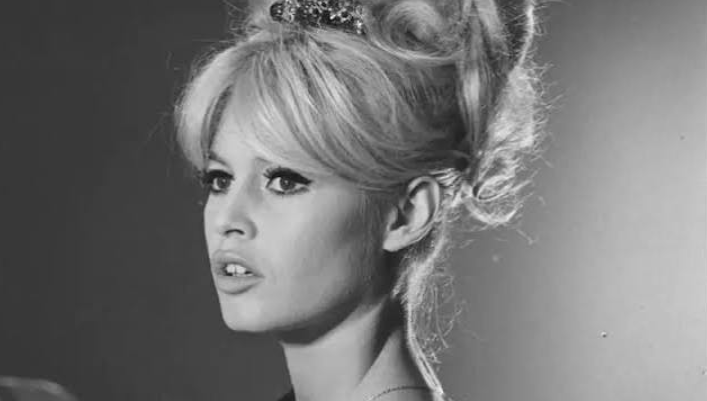
Brigitte Bardot (born 1934) made her name as an actress, singer, and fashion model. In the 1950s, ’60s, and ’70s, she was everywhere—a true fashion icon who helped make trends like the bikini take off. After retiring from show business in the ’70s, Bardot switched gears and became a passionate animal rights activist.
She’s also sparked plenty of debate in France with her outspoken views on immigration and Islam. She was born on September 28, 1934, in Paris, the daughter of a traditional Roman Catholic family. When she was still young, Bardot started ballet classes and eventually studied at the Conservatoire de Paris, where she picked up serious dance skills.
Brigitte Bardot Biography
By 15, Bardot was modeling, and just a year later, she landed her first Elle magazine cover. Her modeling put her on the international map, and in 1952, she started acting with a role in the comedy “Le Trou Normand.” That same year, she married Roger Vadim, who was seven years older and Russian Orthodox—a marriage that only lasted five years, though he remained a key influence on her career.
Her big break came in 1956, starring in “And God Created Woman.” The film was a huge international hit and made her a star. Some of her other well-known films include “A Very Private Affair” (1962), “La Vérité” (1960), “Le Mépris” (1963, directed by Jean-Luc Godard), and “Viva Maria!” (1965). Bardot stayed focused on European cinema and never tried her luck in Hollywood.
In 1959, she married actor Jacques Charrier, and they had a son, Nicolas Jacques Charrier.
Bardot didn’t just stick to acting; in the ’60s and ’70s, she also recorded popular songs, including the steamy “Je t’aime… moi non plus.” She recorded it in the ’60s but didn’t want it released at the time. When it finally came out in 1986, the track quickly became a top download.
Nobody really questions Bardot’s status as a sex symbol of her era. She often posed nude or semi-nude, and her look helped make the bikini a global phenomenon.
In 1970, French sculptor Alain Gourdon used Bardot as the model for Marianne, the French Republic’s national emblem.
Just before turning 40, Bardot retired from acting in 1973 and stepped out of the spotlight—except for a famous nude photo shoot in Playboy for her 40th birthday in 1974.
Once her entertainment career ended, Bardot used her fame to campaign for animal rights. She became a vegetarian and, in 1986, set up the Brigitte Bardot Foundation for the Welfare and Protection of Animals. She’s been vocal against all kinds of animal cruelty since then.
Bardot’s personal life and political opinions have never shied away from controversy. Her fourth husband, Bernard d’Ormale, once advised the National Front—a political party known for its anti-immigration and anti-Muslim views. Bardot didn’t just keep quiet; she publicly supported their candidate in the 2012 election.
French courts have fined her five times for comments they deemed to “incite racial hatred.” In her 2003 book “A Scream in the Silence,” she calls attention to things like Muslim immigration and the practice of ritual sheep slaughter during Eid, which she’s strongly criticized.
Love her or hate her, Bardot’s legacy is full of bold choices—and she’s never been afraid to speak her mind.
About the Author