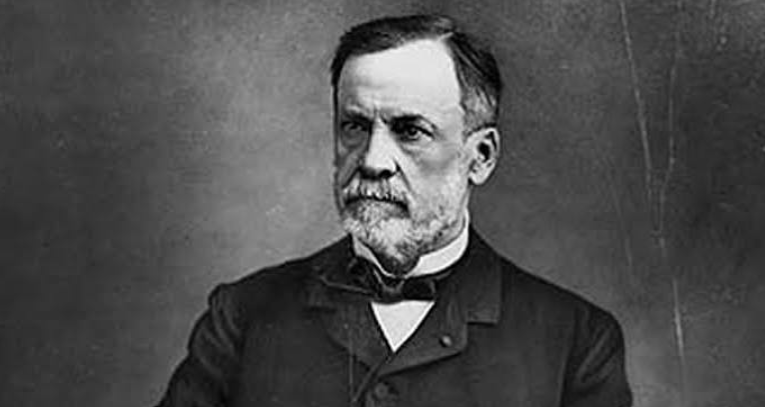
Louis Pasteur (1822–1895) changed the world of medicine and food safety, but he didn’t start out as the obvious genius you might expect. Born in Dole, Eastern France, he was a hardworking student—steady and serious—but his teachers didn’t shower him with praise. One even flat-out called him “mediocre.” Still, Pasteur kept at it and earned his doctorate in 1847. Over the next few years, through research roles in Strasbourg, Lille, and Paris, he dove deep into chemistry. Early on, he figured out that tartrate acid crystals could form as mirror images—right-handed and left-handed isomers—a discovery that nudged scientists closer to understanding molecules.
Louis Pasteur Biography
But Pasteur’s real breakthroughs were about germs. He showed the world that tiny organisms—microbes—were behind things like illness and food spoilage. Before Pasteur, some people believed that life could just pop into existence—spontaneous generation—but he proved that it was all about contamination. Taking this into the practical world, he found a way to kill bacteria in liquids, like milk, without ruining the milk itself. That’s where pasteurization comes in. Instead of making milk taste awful or lose its nutrition, his process simply made it safe to drink, cutting down on diseases like tuberculosis. It saved countless lives.
Pasteur didn’t slow down after that. He kept pushing, working long hours in his lab, chasing more cures. He believed hard work was essential—he once said, “An individual who gets used to hard work can thereafter never live without it. Work is the foundation of everything in this world.”
Anthrax
In the 1870s, he turned his focus to anthrax, a disease that devastated herds of cattle. He figured out that burying dead, infected animals actually made things worse, so he advised farmers against it. By 1881, Pasteur had created and successfully tested an anthrax vaccine. He wasn’t the first to try—Jean-Joseph-Henri Toussaint used carbolic acid on anthrax bacteria the year before—but Pasteur’s reputation meant his method took center stage.
Emboldened by that, Pasteur took on rabies—a disease that terrified people. He created a weakened form of the virus and, after experimenting on animals, he considered testing the vaccine on himself out of caution and a bit of dread over what was at stake. Before he could follow through, a desperate family brought their young son, bitten 14 times by a rabid dog. The boy’s parents put their hope in Pasteur’s hands. Amazingly, the treatment worked. Word spread fast. Soon, hundreds of people came seeking help, and Pasteur and his team worked endlessly to save every one of them.
Still, not every story had a happy ending. When a ten-year-old girl, Louis Pelletier, came for help, Pasteur knew the disease was too advanced. He tried anyway, but she died in his arms. Heartbroken, he told her parents, “I did so wish I could have saved your little one.”
Pasteur’s work shook the medical world. Supporters gathered funds for the Pasteur Institute in 1888 to treat rabies and advance medical research. Pasteur knew how important proper labs were, telling Napoleon III, “Physicists and chemists without laboratories are like soldiers without arms on the battlefield.”
Pasteur died in 1895 at 73, wishing for more time to study new diseases. More than anyone, he helped push average lifespans higher by fighting diseases with practical, life-saving discoveries. He had faith in people and hope for the future, and he worked until the very end to make the world a better place.
Among his greatest achievements?
Creating pasteurization for safe milk, vaccines for rabies and anthrax, and laying the groundwork for vaccines against typhus, diphtheria, cholera, yellow fever, and plague. His principles paved the way—for him, science was always about hard work and doing good.
About the Author