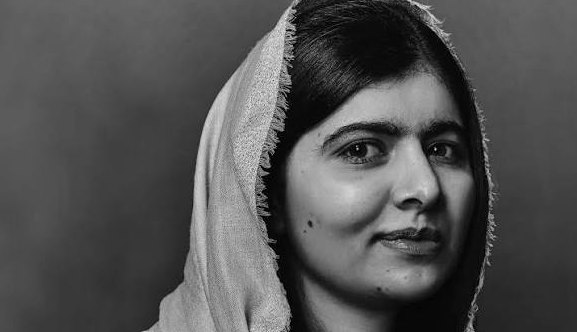
Malala Yousafzai grew up in Pakistan’s Swat Valley, a girl who just wanted to go to school. Her father, Ziauddin, ran local public schools and cared deeply about education. He passed that passion on to Malala—so much that when she was still just a kid, she started blogging for the BBC under the name “Gul Makai,” telling the world what life was like for girls under the Taliban.
The Taliban’s Ban
It wasn’t easy. The Taliban banned girls from going to school, blasted music as evil, outlawed television, and made pretty much anything joyful forbidden. Malala’s valley grew quiet and tense, with schools bombed and most girls afraid to leave home. Still, Malala refused to stay silent, and with her father’s encouragement, kept up her campaign—even when the death threats started coming in.
Her father once thought about sending her away to safety, but Malala wouldn’t go. “I don’t know why, but hearing I was being targeted didn’t worry me. It seemed to me that everybody knows they will die one day,” she wrote later in her memoir, “I am Malala.” Even when her father suggested pulling back, Malala stood firm. She believed their voices would carry—no matter what threats came.
Life After The Blog
After the blog ended, she appeared in a New York Times documentary and began speaking publicly. Her ideas spread across Pakistan and beyond. She won the National Youth Peace Prize, and Archbishop Desmond Tutu nominated her for the International Children’s Peace Prize. The more she spoke out, the more the Taliban noticed.
Then, in October 2012, her school bus was stopped by a masked gunman. “Which one of you is Malala?” he demanded. She didn’t hide. He shot her in the head. Amazingly, she survived, though at first no one thought she would. After emergency surgery and a coma, she woke up in a hospital in Birmingham, UK.
Protests
Malala’s story made waves around the world. Protests broke out. Millions signed a petition for the right to education—pressuring Pakistan to pass its first education bill. The Taliban spokesman claimed the attack was justified, calling Malala a symbol of obscenity. But plenty of religious leaders disagreed; some even issued fatwas against the gunmen.
While she recovered, UN Special Envoy Gordon Brown visited her in the hospital. He launched the “I am Malala” petition, calling for education for every child, an end to discrimination against girls, and a plan to get all out-of-school children in class by 2015. Malala herself later addressed the United Nations. “I am not against anyone… I’m here to speak up for the right of education for every child,” she said, “even the sons and daughters of the Taliban.”
Recognition
Malala became a global name, especially admired in the West. This stirred some backlash in Pakistan, where some suspected the world’s sudden praise for her hid deeper political motives. Malala saw it differently. She took pride in the outpouring of love from everyday Pakistanis and insisted she wanted her country to be seen as more than just the place where a schoolgirl got shot.
She stayed in Birmingham, finished high school, starred in the Oscar-nominated documentary “He Named Me Malala,” and went off to study philosophy, politics, and economics at Oxford University. She kept speaking out, over and over, for children’s right to go to school. “One child, one teacher, one pen and one book can change the world,” she said at the UN.
Her courage, even after being shot, earned her the Nobel Peace Prize in 2014, alongside Indian children’s activist Kailash Satyarthi. The Nobel committee put it simply: Malala showed that young people can change their world, even in the toughest conditions.
For all she’s been through, Malala’s never lost her belief in education or her hope for Pakistan. She remains grateful—and focused on her mission. “Peace in every home, every street, every village, every country—this is my dream. Education for every boy and every girl in the world. To sit down on a chair and read my books with all my friends at school is my right.”
Along the way, she’s met others who fight for change—like Greta Thunberg. Malala joked she’s the only friend she’d skip school for. Clearly, she’s still that determined schoolgirl at heart—just one who now has the world listening.
About the Author