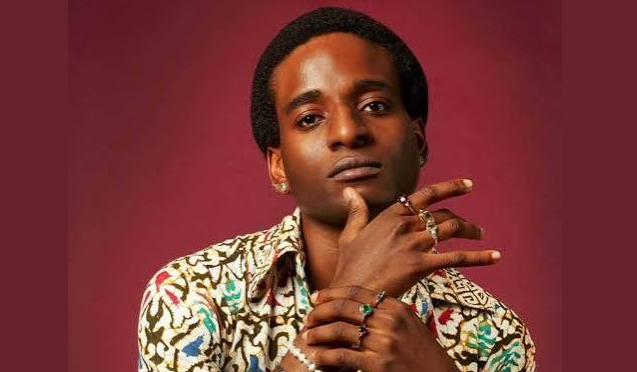
Ozonna Soludo Biography | Controversy, and the Spotlight
Ozonna Ozzy Soludo isn’t an artist who fits neatly into any box. Born on February 11, 1994, in Nigeria, he grew up straddling continents, carving out a life and a sound that’s hard to pin down. Officially, you’ll find that his full name is Ozonna Ozzy Soludo. By 2026, he’s 32 years old. He’s Nigerian-American, the eldest son of Professor Charles Chukwuma Soludo—current Governor of Anambra State, and a man whose impact on Nigerian economics and policy is written all over modern history. But if you’re expecting Ozonna to be another generation in a family of scholars or politicians, think again.
Ozonna’s siblings—Kosiso, Adaora Ifeatu, Chinua, Ekene, Oduko, Ify, and Zik—share the Soludo legacy, but Ozonna charted his own path from the start. Raised mostly in New York and London, he soaked up the energy of those cities. He went on to study at the Institute of Contemporary Music Performance (ICMP) in London, a fitting launchpad for someone bent on doing things differently. He’s a musician, a singer, songwriter, and a content creator. His music sits at the crossroads of afro-fusion, alternative pop, dance, and world—always marrying influences from all the places he’s called home.
The Governor’s Son—Finding His Own Spotlight
When Professor Soludo was sworn in as Governor of Anambra State in 2022, it would’ve been easy to assume the spotlight would stay glued to the political world: governance, economics, banking—those big, serious fields. But the person who got people talking wasn’t a banker. He wasn’t a policy wonk. He wasn’t even in Nigeria. Instead, it was Ozonna, the Governor’s son, making music and headlines from far-off New York, sporting hairstyles that’d turn heads anywhere, releasing indie pop tracks, and building a life and a career on his own terms.
Ozonna is stubborn about his independence. While his dad rose up through stern academic halls and boardrooms, Ozonna launched his own campaign—one track, one video, one performance at a time. For almost two decades, he’s built a career that nobody ordered up for him, and that he wouldn’t let anyone talk him out of.
Early Years—Nigerian Roots, Global Outlook
Being born into the Soludo family in Nigeria, Ozonna got a foundation in the values and traditions of his Igbo heritage. He talks about the experience of being raised in a family where public service and big ideas weren’t just dinner table topics—they shaped his worldview. But the rest of his childhood played out across the Atlantic, in New York and in London. It was in these places, surrounded by a mosaic of cultures and sounds, that he started to dream bigger and blend influences in ways that would later define his music.
Moving between New York and London, Ozonna grew up at the intersection of two electric music capitals. That blend of New York’s deep diversity and London’s edge helped shape his artistic sensibilities. By the time he hit his A-levels in London, he’d already committed—music was his future, come what may. His father, a practical man if there ever was one, faced that truth. Looking back, Charles Soludo told The Guardian Nigeria that those years made it clear where Ozonna’s true passion lay.
The Career Crossroads—Father and Son
It’s hard to imagine the kind of conversations the Soludos had as Ozonna’s passion for music refused to fade. Professor Soludo, who’d mapped out every step of his own remarkable career, wanted Ozonna to take music just as seriously—maybe go as far as getting a PhD in music. But Ozonna had his answer ready. He asked his father what problem the PhD was supposed to solve: was it really for his own career, or just to tick a box for his parents? He knew he didn’t need a doctorate to be an artist. So, instead, he took the practical route—enrolling at ICMP in London, a school built for making musicians, not academics.
What’s striking about Professor Soludo’s approach is how he decided to respond. In interviews, he rejected any notion of forcing his son down a certain road. “Is it for me to choose or for him to choose his career? It is his life,” the Governor said. You don’t hear that often, not from families with deep roots in Nigerian public life. He went on to say that when you see someone’s passion as clearly as he saw Ozonna’s, the right thing is to support it. So, that’s what the Soludos did. They chose to love Ozonna’s career right alongside him.
Schooling and Sound—Shaping the Artist
ICMP wasn’t just a school—it was a crucible for Ozonna’s sound. While studying there, he dove deep into the practical realities of the music world, learning the skills he’d need to survive and thrive. He wasn’t there to become a music theorist; he wanted to perform, to write, to connect with audiences. London in the early 2010s was buzzing with creative energy, and with the help of talents like Lynn Verlayne, and Grammy-nominated producers like Jimmy Greco, Russ DiSalvo, and Scott Jacoby, Ozonna started to stitch together his own musical identity—something that pulled from his Afropop roots, drew on London’s alternative scene, and wore its British-American influences proudly.
At the time, Downtown Artists—a Soho-based artist development group—compared him to Jessie J, which was more than a compliment. It was a sign he belonged among that new wave of UK artists breaking molds and blending genres.
Career—The Long Climb
Ozonna didn’t pick up music when it was convenient; he’s been pursuing it since he was 13. For most Nigerian families, especially one with the Soludo name, that would be wildly unconventional. But Ozonna leaned into it.
2013 was the year things got official. He released “Me and You on Top,” a single that started making small waves on UK music blogs and set him up within the British indie scene. That same year, he got on stage with artists like Crystal Fighters, Kyla La Grange, We Have Band, and Alice Gold. Serious acts, not just the type to lend a slot to a governor’s son. Those shows helped him earn real credibility, no shortcuts.
By 2015, Ozonna had put together his first EP: “Believe It to See It.” Five tracks—each one giving listeners a peek into the kind of hybrid, melodic, full-hearted sound he was aiming for. “We Glow,” the standout track, found a home among his fan base, and the refrain, “and we glow, we glow, we glow,” stuck with people.
He kept working, dropping singles like “Play It Cool” and “So Good” between 2016 and 2022. He was still present—still building, even as his father’s profile in Nigerian politics kept rising. What’s notable: his social media following grew naturally, thanks to posts about music, dance, his life—no fake controversy, just him being himself.
By 2023, Ozonna made something of a comeback with “Take It Slow.” It marked a turn toward afro-fusion, which by that time had become the biggest Nigerian musical export. But for Ozonna, the switch wasn’t about chasing trends. African rhythms had always been in his bones, and now he was bringing them to the front.
His next big move, “Big Flex” in 2025, leaned into that afro-fusion sound even more. By then, Nigerians were paying fresh attention—not just to the music, but to everything Ozonna did.
The Nigerian Stage—Independence Day
In October 2025, he had a defining moment: a debut Nigerian performance at an Abuja cultural festival as part of Independence Day. After years of building a career mostly in the UK and US, it was time to bring that work home. The Nigerian market is a beast—the biggest on the continent, and crucial for validation no matter where you started. If you’re a Nigerian artist, winning at home matters.
Arise TV called it “a new phase” in his career—spot on, really. Ozonna wasn’t showing up as a rookie or a political curiosity. He had years of work under his belt, and he’d chosen to bring that experience back to Nigeria.
Online Buzz, Controversy, and the Spotlight
Pulling off a public career is tough for anybody, but for the son of a sitting governor, it’s even more intense. The scrutiny isn’t about policy or politics—people talk about his hair, his videos, the way he dances, his fashion. It’s almost never about the music alone.
His hair has been headline material more than once. When he showed up with blonde braids in July 2026, the online drama hit a new high. Ozonna’s take? Simple. He knows people have opinions, but he isn’t losing sleep over them. His look, his rules. If anything, he says it’s his confidence that rubs some folks the wrong way.
Once, he had to shoot down wild rumors—people online accused him of making videos in a cemetery. He cleared it up with a shrug in an interview, refusing to get bogged down by the noise.
There was a whole saga about a dancing video, too. Critics wondered out loud if a governor’s son should be that public about… well, being himself. His fans countered that he deserved to live freely. Ozonna never wavered; he keeps putting himself out there, critics be damned.
He’s even disagreed with his dad in public, which is rare in Nigerian politics. When Charles Soludo said Peter Obi couldn’t win the presidency in 2023, Ozonna flatly said he thought Obi was the best candidate. Most sons in his shoes would’ve stayed quiet, but that’s just not Ozonna’s way.
Then there was July 2026: his absence from his sister Oduko’s graduation ceremony at the University of Nottingham blew up online. Everyone wanted to know what the real story was. Rumors swirled about family drama, but a few days later, Ozonna posted a picture with his parents and sister. That pretty much ended the chatter. Even Davido commented on the reunion. It was just a bump, not a rift.
A Father’s Backing
In a society where most elite families expect their children to stay close to power, medicine, law, or business—or, at least, to keep out of the public eye if they step away—Professor Soludo has been loud about supporting Ozonna’s choices. Far from seeing music as a problem to solve, he says he embraced Ozonna’s passion and encouraged the rest of the family to do the same. He told The Guardian: “One could literally touch his passion for music and we decided to also fall in love with his career.” Those aren’t words you hear often from parents in powerful circles.
Ozonna—In His Own Words
When asked about pushback and negative opinions, Ozonna keeps it blunt: he’s not changing who he is for anyone. He’s heard every sort of criticism—about his style, his art, his politics, his life choices. But his answer is to keep showing up exactly as himself, making music because he loves it, not because it’s easy or because anyone gave him permission.
He names Lady Gaga as his role model. That fits. Like Gaga, Ozonna shapes his own identity and refuses to flatten his edges just to please a wider crowd. In that way, he’s not just a fan—he’s making his own philosophy clear.
A Work in Progress
At 32, Ozonna Soludo is still writing his story. He’s put out one EP, plenty of singles, played stages across the UK and US, and just recently brought his show to Nigeria. He’s built everything himself, often in the public eye and often under a microscope that has nothing to do with his music. He may be the son of a governor and an economist, but he’s devoted his life to something that doesn’t fit the family script.
If there’s one true thing you can say about Ozonna Soludo, it’s that he’s refused to let anyone else dictate the terms of his life or his career. He’s a work in progress, but every chapter—so far—has been written in his own handwriting.
Ozonna Ozzy Soludo isn’t an artist who fits neatly into any box. Born on February 11, 1994, in Nigeria, he grew up straddling continents, carving out a life and a sound that’s hard to pin down. Officially, you’ll find that his full name is Ozonna Ozzy Soludo. By 2026, he’s 32 years old. He’s Nigerian-American,…