He grew up farming papayas in a Senegalese village. After finishing high school, he picked up a law degree, dove into tax administration, and, against all odds — from his prison cell — swept the Senegalese presidential election with more than 54% of the vote. Bassirou Diomaye Faye’s education shaped every step that followed.
Bassirou Diomaye Faye Biography: Wikipedia, Ethnicity, and Religion
Wikipedia lists Bassirou Diomaye Diakhar Faye’s birth as March 25, 1980, in Ndiaganiao, in Senegal’s M’bour department. Today, he serves as Senegal’s fifth president, sworn in on April 2, 2024. At just 44, he’s now the youngest man ever elected to lead Senegal. He comes from the Serer ethnic group and belongs to the noble Faye family. His middle name, Diomaye, means “honourable” in Serer, and that’s no exaggeration.
Faye’s a devout Muslim, deeply rooted in both his faith and the rural culture of Ndiaganiao. He speaks French, Wolof, and Serer. His father, Samba Faye, spent decades with the Socialist Party of Senegal, and he made sure his son understood the importance of left-wing values from an early age.
President Bassirou Diomaye Faye’ Elementary School Education
Faye’s childhood was all village life. He’s always highlighted his rural background, saying he absorbed the traditions and values you’d expect from Ndiaganiao and Serer country. His grandfather has his own spot in family legend — as a Tirailleur who fought for France in World War I, he was once jailed after a fight with French colonial authorities over building a local high school. That same school is where Faye started his education.
He finished his primary schooling in Ndiaganiao and then moved on to secondary school.
President Bassirou Diomaye Faye’ University and Other Higher Education
Lycée Demba Diop, Mbour — Baccalaureate (2000)
For secondary school, Faye went to Lycée Demba Diop in Mbour, a seaside town about 80 kilometers from Dakar. He got his baccalaureate in 2000, officially ending his high school run and opening the door to a law career.
Cheikh Anta Diop University (UCAD), Dakar — Law Degree (2004)
From there, he enrolled in law at Cheikh Anta Diop University in Dakar (UCAD), the country’s top public university, named after a famous Senegalese thinker. He graduated in 2004 with a master’s in private law, setting the tone for his life in public service.
National School of Administration of Senegal (ENA) — Tax Inspector Diploma (2007)
Fresh out of law school, Faye nailed the entrance exams for the elite National School of Administration (ENA), Senegal’s training ground for senior public servants. He finished in 2007 and launched straight into work at the General Directorate of Taxes and Domains as a tax inspector. Over the next 17 years, Faye built a reputation for integrity and hard work, earning respect across the civil service.
Education at a Glance
| Institution | Period | Qualification |
|---|---|---|
| Primary/Secondary, Ndiaganiao | 1980s–mid 1990s | Basic Education |
| Lycée Demba Diop, Mbour | Graduated 2000 | Baccalaureate |
| Cheikh Anta Diop University (UCAD) | 2000–2004 | Master’s Degree in Private Law |
| National School of Administration (ENA) | 2004–2007 | Tax Inspector Diploma |
| General Directorate of Taxes and Domains | 2007–2023 | Senior Tax and Land Inspector |
Bassirou Diomaye Faye’s Net Worth in 2026
Bassirou Diomaye Faye’s net worth in 2026 lands somewhere between $1 million and $5 million. That’s based on what he earned as a senior tax inspector for 17 years, his political work, and his presidential salary. Forbes hasn’t done an official profile on him. During his campaign, Faye declared his assets publicly and called on other candidates to do the same—making his anti-corruption stance clear for everyone to see.
Bassirou Diomaye Faye’s Family: Wife and Children
Family-wise, Faye practices polygamy, following his Muslim faith. He married Marie Khone Faye in 2009. She’s known for being devout and veiled, and together they have four kids—three boys and a girl. In 2023, Faye married his second wife, Absa Faye. People only really found out about the details of his family after his big win at the polls.
Bassirou Diomaye Faye’s Twitter, Instagram, and Social Media
When it comes to social media, Faye keeps it official. He’s active on X (formerly Twitter) with his presidential account, where he shares government decisions and national updates. He’s also on Facebook as “Bassirou Diomaye Faye L’officiel.” His posts aren’t personal—they’re about governance, diplomacy, and speaking directly to Senegalese citizens.
People Also Ask About Bassirou Diomaye Faye
Where did Bassirou Diomaye Faye go to school? He attended Lycée Demba Diop in Mbour (baccalaureate, 2000), Cheikh Anta Diop University in Dakar (master’s in law, 2004), and the National School of Administration of Senegal (ENA), graduating in 2007 as a certified tax inspector.
What does “Diomaye” mean? His middle name “Diomaye” means “honourable” in the Serer language.
How did Bassirou Diomaye Faye become president? He was elected president of Senegal on March 24, 2024, after receiving over 54% of the vote in the first round — making him the first opposition candidate to win in the first round since Senegal’s independence in 1960. He was inaugurated on April 2, 2024.
What religion is Bassirou Diomaye Faye? He is a devout Muslim, closely connected to his Serer cultural roots and his family’s village traditions in Ndiaganiao.
How many wives and children does Bassirou Diomaye Faye have? He has two wives — Marie Khone Faye (married 2009) and Absa Faye (married 2023) — and four children with his first wife, three boys and one girl.
President Bassirou Diomaye Faye Education At A Glance
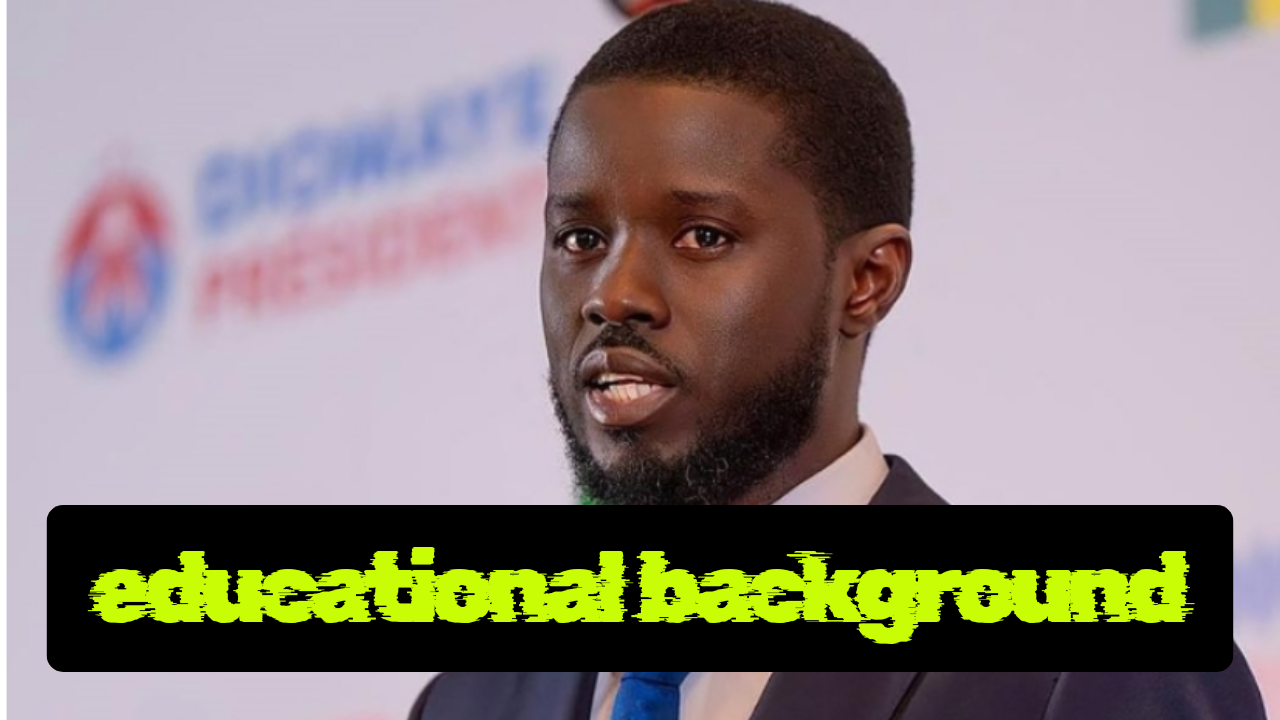
You can’t talk about President Bassirou Diomaye Faye without focusing on his education. It’s the backbone of his story. He grew up in a Serer village called Ndiaganiao, earned a law degree, picked up a tax administration diploma, then spent nearly two decades mastering Senegal’s public finances. Even during his time in prison, he led a movement for democracy. His academic background didn’t just help him move up—it gave him the credibility that convinced 54% of Senegalese voters to put their faith in him.
About the Author