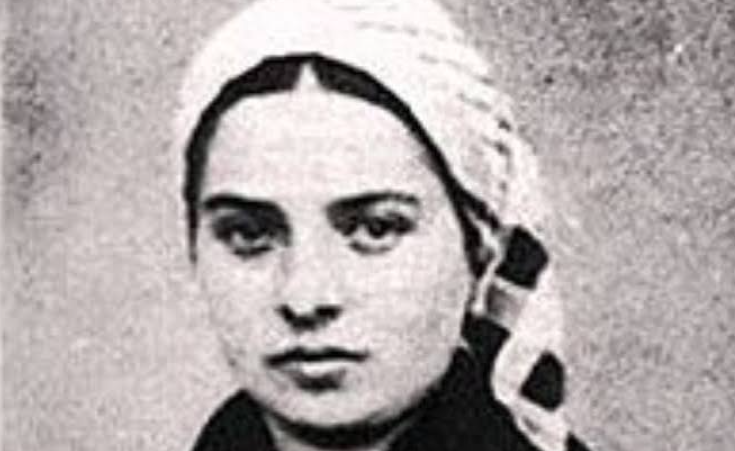
Bernadette Soubirous was just 14 when she started seeing visions of the Blessed Lady in a grotto near Lourdes. At first, most people didn’t believe her. Still, Bernadette’s humility and honesty won many folks over. A few years after these visions, she became a nun, taking the name Sister Marie Bernarde, and later, the Catholic Church made her a saint. Lourdes now draws people from all over the world as one of the most popular religious pilgrimage destinations.
Bernadette Soubirous Biography
Bernadette’s life didn’t start out easy. She was born January 7, 1844, into a caring family, and in the beginning, they got by just fine. But a run of bad luck turned everything upside down, and the Soubirous family ended up in desperate poverty. At one point, her father was unfairly arrested for stealing a single plank of firewood, just to show how hard things got. They moved into a one-room cell—so damp and filthy that it had even been deemed too unfit for prisoners. Somehow, they stuck together as a close-knit and loving family, teaching the kids to accept their hardships without complaint.
Bernadette herself was kind and well-liked but suffered from fragile health, mostly due to the miserable conditions they lived in. Because her family was so poor, she didn’t get much of an education. At 14, she was still taking Catechism classes alongside little kids. She had never even heard of the Immaculate Conception—the concept would change her life soon enough.
First Vision of the Virgin Mary
On February 11, 1858, Bernadette had her first vision. She was out collecting firewood with some friends when she wandered into a grotto that was littered with junk from the river. While her friends went on ahead, Bernadette stayed behind. Here’s how she described it:
“I came back towards the grotto and started taking off my stockings. I had hardly taken off the first stocking when I heard a sound like a gust of wind. Then I turned my head towards the meadow. I saw the trees quite still: I went on taking off my stockings. I heard the same sound again. As I raised my head to look at the grotto, I saw a Lady dressed in white, wearing a white dress, a blue girdle, and a yellow rose on each foot, the same color as the chain of her rosary; the beads of the rosary were white.”
At first, she was confused and a bit scared. But she also felt an overwhelming peace.
When Bernadette went home, she hesitated but finally told her story to her friends, who then shared it with her parents. Her mother forbade her from returning to the grotto. Normally, Bernadette listened, but this time she felt drawn to go back. After Mass the next Sunday, she returned and saw the “Lady in White” again. On her third visit—this time with adults who told her to bring a pen and paper—the Lady finally spoke, telling Bernadette it wasn’t necessary to write anything down. Instead, she asked Bernadette to visit her every day for two weeks. She also told Bernadette, “I cannot promise you happiness in this world, only in the next.”
Word got out quickly. Soon, thousands of people came to watch Bernadette pray at the grotto. People who saw her face during her visions said she looked lost in another world—sometimes filled with joy, sometimes with deep sadness, but always with something special that made everyone around her feel reverent.
Criticism and Disbelief of Bernadette
Still, plenty of skeptics showed up. The police and town leaders questioned Bernadette again and again. Doctors tested her, making sure she wasn’t “crazy.” They pressured her to stay away from the grotto, but she stuck to her story with simple honesty. Bernadette made no effort to exaggerate or profit from any of it.
Bernadette and the Spring of Lourdes
One day, the Lady told her to drink from a spring in the grotto. Problem was—there was no spring. Bernadette dug at the muddy ground until a trickle of water appeared and drank it, which looked pretty odd to the crowds. Her face got smeared in mud. Some went home declaring her story fake, disappointed by the spectacle. But not long after, a spring really did start flowing where she had dug, and people said it brought miraculous healings. The spring of Lourdes, as it became known, is still a major part of why people visit today.
After this, the questioning only increased—she was asked everything you could imagine, even by her parish priest, Father Peyramale, who started out very doubtful. He wanted to know the Lady’s name. For a while, the Lady just smiled when Bernadette asked. Then on March 25, the Lady said, “I am the Immaculate Conception”—words Bernadette didn’t understand but repeated carefully to her astonished priest. This was a pretty big deal, because the doctrine had only just been officially recognized by the Church.
People continued to witness strange things during these visions. Dr. Dozous, one observer, described how a candle flame touched Bernadette’s hand without hurting her. He checked her hand—no burns. But when he tried to repeat the trick, Bernadette said, “You’re burning me!” He never explained it, just stated what he saw.
Bernadette and the Virgin Mary
The last time Bernadette saw the Lady was July 16. She couldn’t enter the grotto, only stand across the river. Even so, she felt the Lady’s presence. They said their goodbyes in silence. Bernadette was also told a secret she never shared.
Bernadette always insisted the Lady looked young and beautiful—so beautiful, she said, “when you have seen her once, you would willingly die to see her again.” No painting or statue ever matched what Bernadette remembered.
After the visions, Bernadette really didn’t like being the center of attention. She wanted a quiet life. But the story of Lourdes had already spread everywhere, and for years people came to meet her—believers and skeptics alike. No matter how tiring it must have been, she listened to everyone with patience and kindness. When she talked about the Virgin Mary, people said her eyes would light up.
She considered joining a Carmelite convent, but she was too sickly for that demanding life. Instead, she became a nun at Nevers, taking the name Sister Marie Bernarde.
She spent the next 13 years living quietly, suffering from health problems. She used to joke her only job was to “suffer.” Still, her humility and cheerful spirit inspired the other sisters. Even in pain, she never complained—just offered her quiet prayers and carried on. People noticed she would make the sign of the cross with deep devotion and always called herself “the stupid one,” never thinking herself worthy.
When she entered the convent, the sisters asked her to tell them about the visions. The Mother Superior asked that it never be mentioned again, which suited Bernadette just fine—she wanted to move on. But church leaders and dignitaries kept coming to speak with her, which wore her out, though she always answered their questions politely and patiently. She never revealed what the Lady had asked her to keep secret.
Toward the end of her life, Bernadette’s health got worse. She could barely get out of bed. When someone asked why she didn’t go to Lourdes for healing, she replied, “It is not for me.” On her last day, wracked with pain, she asked the sisters to pray for her soul. As they did, she revived briefly, made the sign of the cross, took a sip of water, and died.
After her death, the Church investigated everything carefully and eventually declared her visions genuine. She was beatified in 1925 and canonized in 1933—not so much for what she saw, but for how she lived: simply, humbly, and faithfully. St. Bernadette became the patron saint of the sick, of families, and of the poor.
Thirty years after she died, Bernadette’s body was exhumed and found perfectly preserved. Today, it rests in a shrine at the Convent of St. Gildard in Nevers, a place where people still come to remember and pray.
About the Author