Paul Gauguin was born in Paris in 1848. Even though he started his life in France, he spent his first seven years in Peru because of his mother’s family. Eventually, his family moved back to Paris, where he grew up. Gauguin did well in school and soon fell in love with art. Before he became a full-time painter, he worked on a merchant ship and then spent two years in the French navy. He quit both and turned to stockbroking, thinking that was his path. But art kept calling. In Paris, as he became more involved in the art scene, he befriended Camille Pissarro, who was already making a name for himself.
Paul Gauguin Biography
In 1873, Gauguin married Mette Sophie Gad, a Danish woman. They had five children together. He tried settling down in Copenhagen, working as a stockbroker to support his family. But honestly, painting mattered more to him than finance. Eventually, he left his job—and his family—to go back to Paris and focus on art.
At first, Gauguin was into Impressionism, but he grew tired of it. To him, the artists just seemed to copy each other. He started looking elsewhere for inspiration, especially to African and Asian art, which he believed held deeper meanings and more powerful symbols. In 1887, he spent time in Martinique, living in a simple hut and soaking up local culture.
A year later, Gauguin joined Vincent Van Gogh in Arles for nine intense weeks. They pushed each other artistically, but they fought a lot, too. Both men wrestled with depression and mood swings, which made their friendship both creative and chaotic. Still, that time together sparked some incredible work from both.
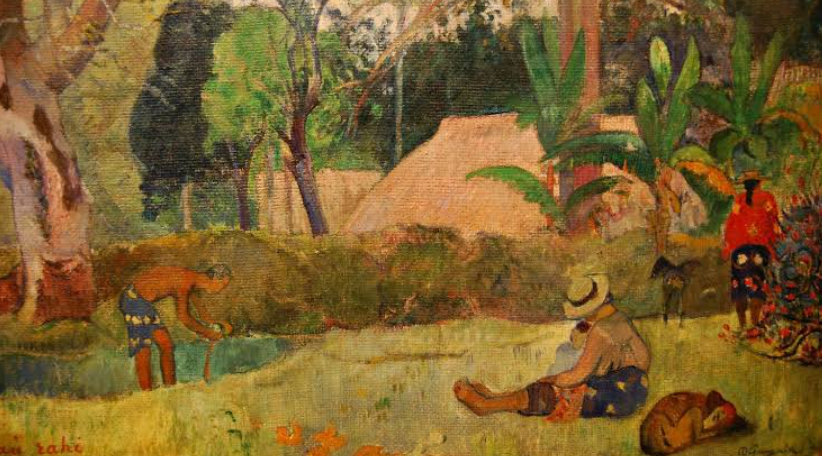
Take “The Yellow Christ” from 1889. The painting shows how Gauguin cared more about bold areas of color than smooth transitions. At first, his style only impressed a few fellow artists; the public didn’t buy it, and he struggled financially. In 1891, he left for the tropics, hoping to find freedom and a simpler life where he could paint as he wished.
While in Polynesia, Gauguin sided with the local people, especially when they clashed with colonial authorities and the Catholic church. He wrote down his thoughts about life in Martinique and Polynesia, capturing his fascination with those places.
Gauguin died in 1903 from complications due to syphilis. They buried him on Hiva ‘Oa in the Marquesas Islands. Today, his paintings and his bold approach to art still grab people’s attention—proof that he walked his own path, no matter the cost.
About the Author