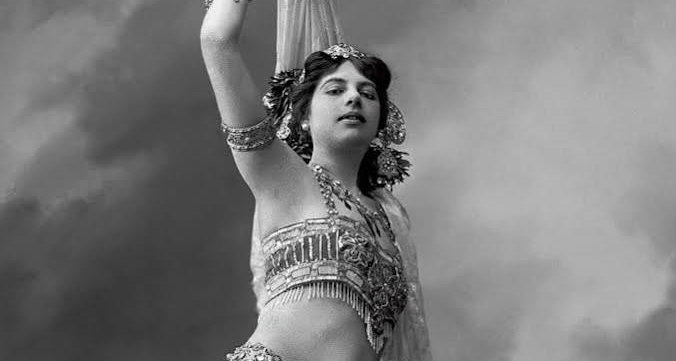
Mata Hari was a Dutch dancer who made a name for herself in France. People everywhere knew her for her exotic, glamorous style. But during the First World War, things took a dark turn—she was arrested and accused of spying, then executed by a French firing squad. People still argue about whether she was really guilty.
Mata Hari Biography
She started life as Margaretha Geertruida Zelle, born on August 7, 1876, in Leeuwarden, Netherlands. Her early years were comfortable—her father, who adored her, sent her to elite private schools. She got used to attention, especially from men, because her dad called her his “little princess.” But everything changed in 1889 when her father went bankrupt and her parents split up. She tried to become a kindergarten teacher, but her godfather yanked her out after the headmaster took a special interest in her.
When she was 18, she answered a newspaper ad from a Dutch officer stationed in Java, in the Dutch East Indies. Back then, it wasn’t unusual for Dutch men living overseas to search for wives using newspaper ads. Margaretha moved to Java, got married, and had two children. The marriage didn’t go well. Her husband, Rudolph Macleod, struggled with alcoholism and often took out his anger on her. Margaretha, for her part, hated being a housewife. She once said, “I was not content at home… I wanted to live like a colourful butterfly in the sun.” While in the East Indies, she learned local dances and soaked up the culture. She even had an affair with another Dutch officer before eventually returning to her husband. After their son died, she and Rudolph divorced in 1902.
Paris
Margaretha showed up in Paris in 1903. First, she worked in a circus, then tried her luck as an exotic dancer. She had an edge: her time in the East Indies gave her the perfect backstory. She told people she was a Javanese princess of Hindu descent. Audiences were hooked. A biographer described her as having a languid, graceful style—a presence that left men spellbound.
This is when she adopted the stage name Mata Hari, which means “the eye of the day” in Javanese. She blended sensuality with dance in a way people hadn’t really seen before. She embraced her sexuality, inspired by Eastern traditions and Egyptian styles, shaking up the world of performance. Some admired her for lifting exotic dance into new territory. Others saw her act as just cheap titillation dressed up as culture.
She moved in powerful circles. Her lovers included the German crown prince, wealthy Frenchmen, and top French military officers.
World War I
Then came World War I. Suddenly, her globe-trotting lifestyle became a problem. She got stranded in Germany, cut off from her usual income, but managed to find a way back into France. Because she was Dutch—her country stayed neutral during the war—she could travel across borders pretty freely. She moved between Germany and France, sometimes passing through Britain or Spain to stay clear of the front lines. With friends (and lovers) in both German and French high society, people started whispering. Was she gathering secrets? Was she picking sides? On one occasion, she admitted to British officials that she spied for France, but the French themselves never came to her defense.
In January 1917, the French intercepted a coded German message. It said a spy codenamed H-21 (Mata Hari’s codename) gave them lots of useful information. That set off alarm bells. The French arrested her. But later, people realized the Germans already knew the code had been broken. Some think the Germans sent that message just to frame her—a little misdirection, maybe because she was actually working for the French. In the end, there wasn’t much evidence against her. Thirty years later, one of the prosecutors admitted their case was too thin to “flog a dead cat.” Still, after a quick trial, she faced a firing squad on October 15, 1917.
Never once had the iron will of the beautiful woman failed her
Her execution sparked plenty of rumors and legends. By most accounts, she dressed elegantly, refused a blindfold, and faced death head-on. A British reporter, Henry Wales, wrote that as guards led her away, she just said, “I am ready.” According to him, “Never once had the iron will of the beautiful woman failed her.”
A dozen soldiers made up the firing squad. Mata Hari fell to her knees after they fired. An officer finished the job with a pistol shot to make sure she was dead.
Afterward, her life became legend. Every telling adds something new—she’s part spy story, part tragic figure, always mysterious.
About the Author