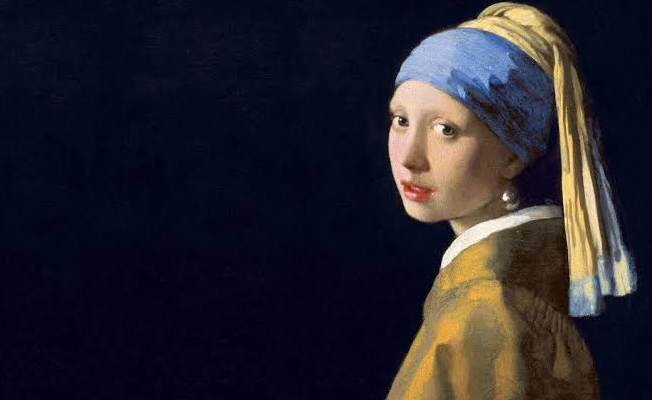
Jan Vermeer, sometimes called Johan Vermeer, lived from 1632 to 1675 and made his mark as a Dutch Baroque painter during what’s now called the Golden Age of Dutch Painting. Strangely, hardly anyone outside his hometown noticed him while he was alive. But in the 1800s, people rediscovered his art—and these days, he’s seen as one of the great Baroque painters, thanks to his quiet portraits and scenes from everyday life. If there’s one thing people admire about Vermeer, it’s the way he could shine a gentle but dignified light on ordinary moments and objects.
Jan Vermeer Biography
What do we know about Vermeer’s early life? Honestly, not much. He was baptized on October 31, 1632, in Delft, but after that, the details get pretty thin. He didn’t travel far from home, and most of his paintings ended up with a local collector. Vermeer’s father ran an inn and sold paintings on the side. When his father died in 1652, Vermeer took over both the inn and the art business. He inherited even more when his mother passed away in 1670, including her tavern. He spent plenty of nights working there, serving drinks to the locals.
In 1653, Vermeer married Catherina Bolnes, a Catholic. There was a catch: he had to convert from his Dutch Reformed background to Catholicism. Together, they had 14 children, though four died before baptism. Imagine all that noise and chaos at home—fourteen children and a mother-in-law who apparently loved to argue. Still, Vermeer painted most of his works in his house, working away in his studio while life bustled around him.
He wasn’t what you’d call a prolific painter. Vermeer only finished around three paintings a year. Part of the reason was his painstaking technique. He used a method called pointille, building up colors in tiny layers so the final painting seemed to glow from within. He cared deeply about getting light and color just right. Instead of grand scenes, he painted people doing everyday things—”The Milkmaid,” “The Music Lesson”—using props from home, like pitchers, chairs, and even his mother-in-law’s big oak table.
Look at one of Vermeer’s paintings, and the radiance pops out right away. Some, like David Hockney, think Vermeer might have used a camera obscura—a primitive type of camera—to help him capture all that perfect light and weirdly accurate detail. Whether he did or not, his way with light and shadow turns simple household scenes into something almost otherworldly.
His portraits—especially of women—stand out too. Vermeer had a knack for capturing a calm, poised, almost serene quality. Sometimes it feels like he was showing an ideal version of life, one that maybe didn’t quite line up with reality.
Life Was Hard
Life wasn’t always kind to Vermeer. The Dutch economy took a dive around 1653. Then in 1654, a huge explosion hit Delft, damaging part of the city—though in his famous cityscape, he deliberately painted the undamaged area. In 1662, Vermeer’s fellow artists chose him to lead the Delft painters’ guild, a sign that his peers really respected him. They re-elected him in 1670. But disaster struck again in 1672: another economic crisis, plus invasions by French and English forces. Business dried up, and Vermeer had to borrow money to keep his family afloat. The stress took its toll. In 1675, he died suddenly—only 43 years old.
Of all his paintings, “The Girl With a Pearl Earring” is probably the most famous. After a restoration in 1994, people could really see the delicate, subtle colors he used. Some call it the “Mona Lisa of the North.”
Vermeer grew up in Delft alongside Antony van Leeuwenhoek, the pioneer of microbiology. In fact, they were born just four days apart. Two quiet lives, but both changed the world in their own way.
About the Author