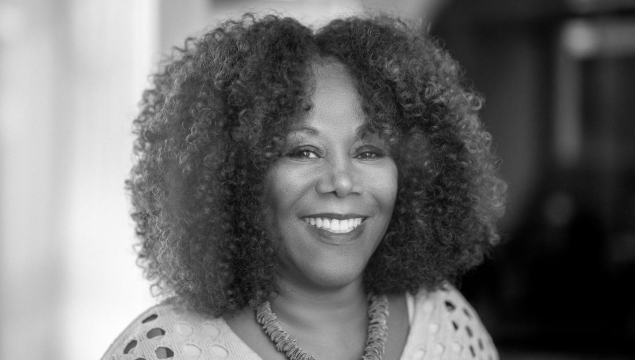
Ruby Bridges, born in 1954, is an American civil rights activist who broke barriers as the first Black child to attend an all-white elementary school in Louisiana. Her brave step into William Frantz Elementary turned her into a symbol of the civil rights movement and sparked a new era of desegregation in American schools.
Ruby Bridges Biography
She was born on September 8, 1954, in Tylertown, Mississippi. Her parents, Lucille and Abon Bridges, were poor, working as sharecroppers. As the oldest of five kids, Ruby spent a lot of her childhood caring for her siblings. The family moved to New Orleans when Ruby was two, after her dad found a job pumping gas.
Just before Ruby was born, the Supreme Court made a big decision. In May 1954, Brown v. Board of Education declared that segregated schools were unequal and unconstitutional. Even so, states in the South ignored the ruling as long as they could. They clung to segregation — especially in grade schools. In 1957, the federal government had to send troops to forcibly integrate a high school in Little Rock, Arkansas, but elementary schools were left untouched.
By 1960, the government started to pressure Southern states to desegregate. In New Orleans, the school board set up a tough entrance exam to keep Black children out of white schools. The NAACP saw an opening. They encouraged Black families to have their children take the test. Ruby was one of six who passed, but only a few went ahead. Because of threats and pressure, two families backed out. Three children transferred to McDonogh No. 19. Ruby, on her own, would head for William Frantz Elementary.
Someone had to break the line
Ruby’s dad was scared for her safety but her mother insisted she should go. Lucille believed this was Ruby’s chance for a better education — one her parents never had. And someone had to break the line. Ruby later said, “I think my mother and father were the bravest people I know.”
Judge J. Skelly Wright supported the end of segregation and backed the Supreme Court’s decision in Louisiana.
On November 14, 1960, six-year-old Ruby walked up to her new school flanked by four federal marshals. She was told to keep her eyes down and walk straight, so she wouldn’t see the hate on protesters’ faces. A loud, angry crowd was outside, screaming and throwing things. But Ruby, being a little kid from New Orleans, thought it looked just like Mardi Gras. “I could see the crowd, but living in New Orleans, I actually thought it was Mardi Gras,” she remembered. “They were throwing things and shouting — that sort of thing goes on at Mardi Gras.”
All the white parents pulled their kids out of school in protest. On her first day, Ruby was the only student there, and all but one teacher refused to work. That one teacher was Barbara Henry, who’d come from Boston. The next day, one white child—a little girl named Pam Foreman Testroet—came back, led in by her minister father, Lloyd Foreman. After that, more students slowly trickled back, and the boycott fizzled. Still, by the end of the year, Ruby spent her days alone in a classroom with Mrs. Henry.
The Threats
Every day, Ruby faced threats, so federal marshals walked her to and from school. There were rumors that someone would poison her, so her mom packed her food each day. She wasn’t allowed to eat in the cafeteria or play outside with the other kids. Remembering her first-grade year, Ruby said, “It was very lonely. I didn’t have any friends, and I wasn’t allowed to go to the cafeteria or play on the playground. What bothered me most was the loneliness in school every day.”
Child psychiatrist Robert Coles, who specialized in helping kids facing trauma, volunteered to counsel Ruby every week. He later wrote about her story. Coles said meeting Ruby changed him forever. “She is my touchstone… I was just thunderstruck by that mob and her stoic dignity, and so I went back and watched it again and again.” A relative of Coles also gave Ruby a set of school clothes, a kindness Ruby only found out about years later.
The Bridges family paid a heavy price for their courage. Abon lost his job. The local grocery store banned them.
Ruby finished high school and worked as a travel agent for 14 years. In 1993, she went back to Frantz school as a parent liaison. Her family suffered another tragedy when her youngest brother was murdered. Ruby took in his four daughters to raise.
Ruby Bridges Foundation
In 1999, she founded the Ruby Bridges Foundation, which focuses on education and promoting tolerance and unity among children. She also wrote her story in Through My Eyes. She once said, “Racism is a grown-up disease and we must stop using our children to spread it.”
Bill Clinton awarded her the Presidential Citizens Medal in 2001.
Hurricane Katrina destroyed Ruby’s home in 2005, and the William Frantz school suffered heavy damage too. As the school turned almost entirely Black, Ruby pushed to keep it open and to make it a place for children of all races. For her, just having “equal rights” wasn’t enough — kids needed real opportunities to mix and grow up together, so old lines wouldn’t get drawn all over again. “It’s not just about having equal rights,” she said. “It’s also about allowing our children an opportunity to get to know one another.”
Barack Obama
In 2011, Norman Rockwell’s famous painting of Ruby’s school entry was displayed in the White House. When she met President Barack Obama, he told her, “I think it’s fair to say that if it hadn’t been for you guys, I might not be here and we wouldn’t be looking at this together.”
About the Author