Vincent Van Gogh wasn’t just another artist—he had something raw and untamed in him. Inspired by the Impressionists around him, he carved out his own way of seeing the world. His strokes felt alive, almost impulsive, and his work ended up shaping what we think of today as modern art. Funny thing is, he barely saw any recognition while he was alive.
He wrestled with his place in the world. In a letter to his brother Theo, he wrote, “What am I in the eyes of most people—a nobody, an eccentric, or an unpleasant person—somebody who has no position in society… All right, then. Even if that were absolutely true, I’d still want to show, through my work, what such a nobody has in his heart. That’s my ambition, and honestly, it comes more from love than from any kind of resentment.”
Vincent Van Gogh Biography
Van Gogh’s story starts in 1853, in the small Dutch village of Groot-Zundert. His father was a pastor, and art ran on his mother’s side—he had three uncles working as art dealers. But growing up wasn’t easy for Vincent. Early on, he tried working at his uncle’s gallery, but it never really clicked. Restless, he became a Protestant minister and took a post in a poor, rural area. He felt for the people there and even started living as they did, embracing their poverty. That didn’t sit well with church authorities, though. They said he was undermining the dignity of the priesthood and sent him packing.
So, frustrated and at another crossroads, Van Gogh turned to art. He didn’t love formal classes, but he studied painting in Brussels and Paris. The start was rough—his teachers even kept him back a year because they thought he was bad at drawing. His early drawings, by his own admission, were just “scribbles.” But he didn’t let that stop him. He threw himself into art, sometimes at the cost of regular work. Jobs slipped through his fingers: fired from the art gallery for arguing, losing a teaching job, failing to stick as a priest. So how did he make ends meet? His devoted brother Theo sent money and art supplies. Without Theo, there wouldn’t be a Vincent Van Gogh as we know him.
Van Gogh’s Touch
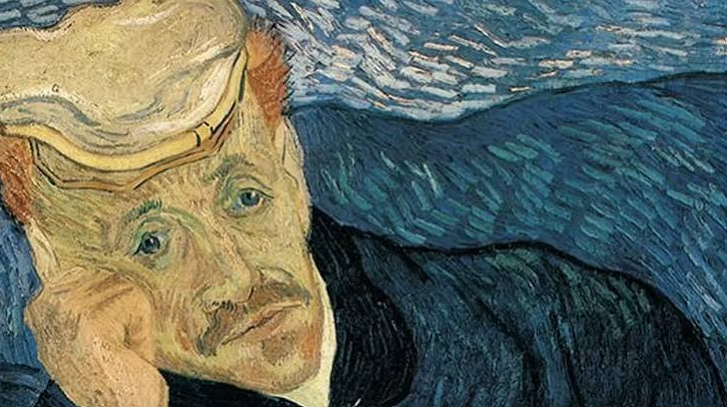
With Theo backing him, Van Gogh landed in Arles, in the south of France, in 1888. This is where his art just exploded. He painted outside, took in nature, and could churn out five paintings a week. He sketched everything: wheat fields, starry skies, the people around him. Paris had exposed him to the Impressionists—Monet, Renoir, and others obsessed with capturing light. But Van Gogh’s touch was different. His colors—those wild yellows and reds—his stubborn, straight-from-the-gut brushwork, gave his paintings a kind of electricity.
There was this urgency about him, like he had something inside that needed out. He once told Theo, “I work, I drudge, I grind all day long and I do so with pleasure… I feel, Theo, that there is a power within me, and I do what I can to bring it out and free it.” He wasn’t interested in appearances or even making money—he just had to paint. In his entire life, he sold only one painting. Now, of course, his works sell for millions.
His mental health was always fragile. Living in Arles, he invited Paul Gauguin to join him, hoping for artistic kinship, but it fell apart. Van Gogh’s moods became more unpredictable. After a breakdown, he cut off part of his own ear. The next years included stints in asylums, and his letters from this time swing between moments of clarity and deep anguish. “Sometimes moods of indescribable anguish, sometimes moments when the veil of time and fate seemed to split for an instant,” he wrote.
Yet, somehow, this period was also when he painted the most—faster, bolder, more experimental. He painted not because he wanted to, but because he truly couldn’t stop. “The work is an absolute necessity for me,” he told Theo, “and I become melancholy when I can’t go on with my work.”
In 1890, a string of setbacks pushed him over the edge. While out painting, he shot himself in the chest. He died two days later.
Religion
Religion was always complicated for Vincent. He distrusted organized religion yet never called himself an atheist. “That God of the clergymen, He is for me as dead as a doornail. But am I an atheist for all that? The clergymen consider me as such—be it so; but I love, and how could I feel love if I did not live…?” To him, painting had a spiritual pull. He believed that great art hid something divine. Loving many things, he wrote, was the best way he knew to reach for God.
Van Gogh’s whole life was a struggle—with himself, with society, with the gap between how he felt inside and what the outside world saw. But even when that world turned its back, he still painted. And in the end, that’s what mattered.
About the Author